
A surface finish plays an important role when it comes to the look and feel of a home. Not only the visual appeal, the surface material also plays an important role in determining how a furniture appears and performs over time. This is where the comparison between acrylic vs veneer vs laminate comes up to make an informed decision.
Let us see the surface finish comparison for furniture to choose the right option for one’s lifestyle and interior design preferences.
Understanding Acrylic, Veneer, and Laminate
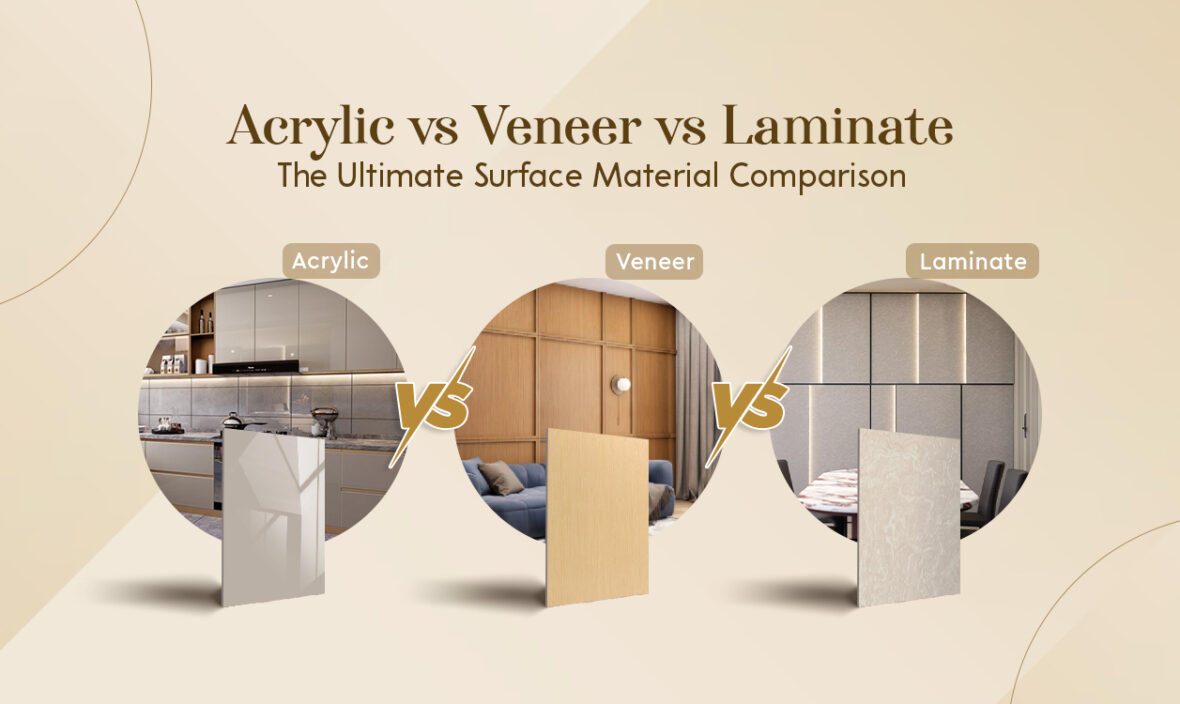
When planning furniture surfaces, we commonly compare between acrylic vs veneer vs laminate where we learn every single material has its own benefit suiting different interior styles.
Acrylic offers high gloss finish with smooth finish. It is used in modern kitchens and wardrobes where sleek, polished appearance is required. Acrylic surfaces are known for its bright, contemporary look making it ideal for minimalist themes.
Veneer is made by applying a thin slice of natural wood on base material like plywood or MDF. As veneers are made using real wood, they offer a rich, authentic texture and felt furniture and interior décor.
Laminate is a decorative surface material that is manufactured by compressing several layers of paper and resin under heat and pressure. They are available in a wide variety of textures, colours, and patterns, making them one of the most versatile materials used in interior design applications.
Acrylic vs Veneer for Kitchen Spaces
Kitchen cabinets make use of surface materials that are resistant to heat, moisture, and frequent cleaning. This is why most homeowners do a comparison between acrylic vs veneer for kitchen before choosing the material.
Acrylic surfaces are used in kitchens given their reflective, glossy finish that makes the space appear brighter, and spacious. The surface material is non porous, and does not absorb water, grease, oils or spills, making it easy to clean.
Veneer provides a natural, warm look and is ideal for homeowners looking for rustic, earthy wooden touch providing a warm feel. When comparing acrylic vs veneer for kitchen applications, it is important to assess if the homeowner is looking for a modern glossy look or a natural wooden aesthetic.
Maintenance is another important aspect to consider when evaluating acrylic vs veneer for kitchen. Acrylic surface is easy to clean and maintain unlike veneer which requires more care in maintaining its polished finish.
Choosing the Right Material for Wardrobes
Wardrobes are an important furniture application when it comes to the bedroom and occupies considerable space, making it important to design them such that they have a strong visual impact with style elements and practicality.
Laminate is used commonly for wardrobes given its durability, and resistance to scratches, smudges and stains. They come in a variety of designs, colours and textures ranging from wood patterns to solid colours to suit different interior décor themes.
Veneer wardrobes are apt where an earthy, understated luxury look is preferred. It is ideal where one looks for traditional aesthetics adding warmth and richness to bedroom furniture. The choice between laminate vs veneer vs acrylic for wardrobe depends on design preference, maintenance expectations, and budget.
Acrylic wardrobes are ideal for those to add contemporary touch to one’s bedroom with a reflective surface. When comparing, laminate vs veneer vs acrylic for wardrobe, acrylic is commonly preferred.
Best Material for Kitchen Cabinets in India
Indian kitchens always have presence of moisture, heat, along with some or other spills through the day given the heavy usage. This where choosing the best material for kitchen cabinets India becomes a topic of debate.
Laminates are an ideal choice as surface material given its durability, affordability and versatility to suit every type of kitchen design, be it contemporary or traditional.
Veneer is used as surface material in premium kitchens where one prefers a natural touch to the space. Natural aesthetics are important.
When deciding on the best material for kitchen cabinets India, one must first evaluate the general lifestyle, the cooking frequency, the foot traffic and usage through the day, along with time available to maintain.
Surface finishes of a furniture is not just about visual appeal, but also about longevity, convenience and everyday performance. It is recommended to do a detailed surface finish comparison for furniture with consideration of strengths and drawbacks to make an informed decision.
Acrylic surface materials are known for its sleek modern look, with smooth finish and clean lines, whereas veneers provide a sophisticated, earthy, rustic wooden look. On the other hand, laminates are known for their versatility offering a wide range of colors, finishes and textures to choose from depending on the interior décor theme. When comparing acrylic vs veneer vs laminate, each type has its own benefits. Evaluate the space, design style, and practical requirements of the household and pick the right material from reputed brands like Royale Touche that enhance both the beauty and functionality of their living spaces.
Frequently Asked Questions
1. What is the main difference between acrylic, veneer, and laminate?
Acrylic offers a glossy modern finish, veneer provides a natural wood appearance, and laminate delivers durability with a wide variety of design options.
2. Which material is better for wardrobes?
The choice depends on design preference. Laminate is durable and versatile, acrylic offers a glossy contemporary look, while veneer gives a premium natural wood finish.
3. Is acrylic a good option for kitchen cabinets?
Yes, acrylic is commonly used for kitchen cabinets because it has a smooth surface, a high-gloss appearance, and is relatively easy to clean.
4. Are laminate surfaces durable for daily use?
Laminate surfaces are known for their durability and resistance to scratches and stains, making them suitable for frequently used furniture.
5. Which surface finish requires the least maintenance?
Laminate generally requires the least maintenance, while acrylic needs gentle cleaning to maintain its shine and veneer requires careful upkeep to preserve its natural wood texture.