
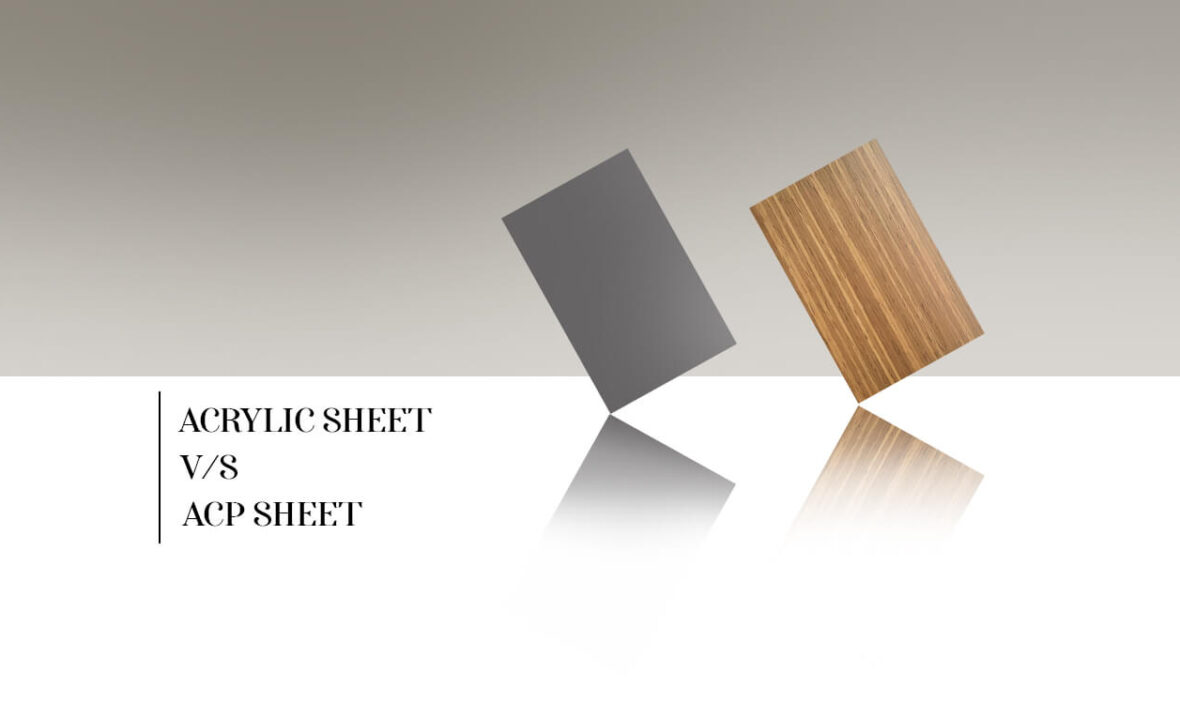
When it comes to selecting surface materials for interior or exterior applications, homeowners or architects usually limit their options to just two important materials: acrylic sheet and acp sheet. Both offer durability, versatility and aesthetic appeal, but their functionality, costs and structural requirements are completely different in use. When you know the distinction between acp sheet and an acrylic sheet, your decision is based on what your project requires.
In modern times, materials for building interiors and exteriors create flexible designs, withstand weather, and offer long-term value. When designing that includes any type of signage, or wall cladding, partitions, or furniture material, both an acrylic sheet or an acp sheet, will give you very different end results. Let’s look at the materials and how they work on their own and how they differ from each other.
1. What is an Acrylic Sheet?
An acrylic sheet is a clear, or coloured, man-made polymeric material known for its glass-like appearance and high clarity. Acrylic sheets are lightweight, impact resistant and optically bright. For the above reasons, many designers look to acrylic sheets when they need a clear finish or high-end look for a project such as interior decor, partitioning, illuminated signage or display components.
An acrylic sheet also can be customisable, as it can be formed with laser cut or CNC, and since it is shiny and clear, acrylic is also used in furniture, signage or art installations.
2. What is an Acp Sheet?
An acp sheet (Aluminium Composite Panel) consists of two thin layers of aluminium with a core that is not made of aluminium. For this reason, acp sheets are lightweight, durable and weather resistant. An ACP sheet is often employed for exterior cladding and large commercial facades, providing rigidity and durability.
Moreover, an aluminium composite panel is often employed for branding applications, false ceilings, kiosks, column coverings, and wall panelling options in commercial buildings. The aluminium composite sheet’s strength and versatility have allowed it to become a trusted material in residential and commercial designs.
3. Construction and Material Properties
The construction of the ACP sheet is unique compared to an acrylic sheet.
The acrylic sheet is composed of PMMA (polymethyl methacrylate) for its gloss, clarity, and flexibility.
An ACP sheet is a substrate material composed of a strong core with aluminium sheets on either side.
Given its structure, an aluminium composite panel is more rigid than an acrylic sheet, while the acrylic sheet is more transparent with form and artistic flexibility.
4. Durability and Strength
In terms of structural durability, the ACP sheet outperforms.
Unlike acrylic sheets, the base material strength of an ACP sheet can handle strong winds, UV damage, and varying temperatures. An ACP sheet is also superior with exterior applications, as it is unparalleled.
An acrylic sheet is somewhat impact and break-resistant compared to glass but is mostly for interior applications. Acrylic can scratch if not properly cared for, among other contrasts between ACP sheet and acrylic sheet.
5. Weight and Workability
Both products are lightweight, but an acrylic sheet is lighter than acp sheets, making it a better option when considering DIY installations, smaller decor items, or display stands.
Although an acp sheet is easier to cut, rivet, bend, or route into structural projects, especially because those products create some architectural projects. This workability factor is part of the particular reason the acp is used in many larger architectural applications.
6. Aesthetic Appeal
An acrylic sheet visually lends itself to a premium glossy appearance, crystal clarity, and a beautiful glass-like surface. Perfect for instances where visual aesthetic is a top priority.
An acp sheet offers a wider variety of textures, such as stone, wood, metallic, textured surfaces, and matte versus gloss. The aluminium composite surface will provide greater possibilities for a design theme on the exterior side of a project.
7. Cost Comparison
Generally, an acrylic sheet is a more expensive product due to the optical clarity and premium finish versus an acp sheet. However, an acp sheet is much more cost-effective with larger surface areas and is the most feasible option for commercial installations.
The cost-to-value is another difference between an acp sheet and an acrylic sheet which buyers need to understand before deciding which product to use.
Conclusion
Upgrade your interiors and exteriors with premium options of acp sheets and acrylic sheets designed for durability, beauty, and performance. Browse stunning finishes, bold textures, and designs with high-grade acrylic surfaces or premium aluminium composite panels with Royale Touche.
Frequently Asked Questions
1. Which is the best option for exterior cladding?
An acp sheet, or aluminium composite panel, is the best option due to the durability and weathering properties.
2. Is an acrylic sheet good for signage?
Absolutely, the clarity of an acrylic sheet is widely used with backlit signage, displays, boards, and décor.
3. Can both products be used indoors?
Absolutely, both an acp sheet and an acrylic sheet are suitable for interiors, pending design requirements.
4. Are aluminium composites fire resistant?
Many variants of aluminium composite sheets contain fire-retardant cores.
5. Which is more budget-friendly acrylic sheet?
Typically, an acp sheet is more affordable with larger applications than an acrylic sheet.