

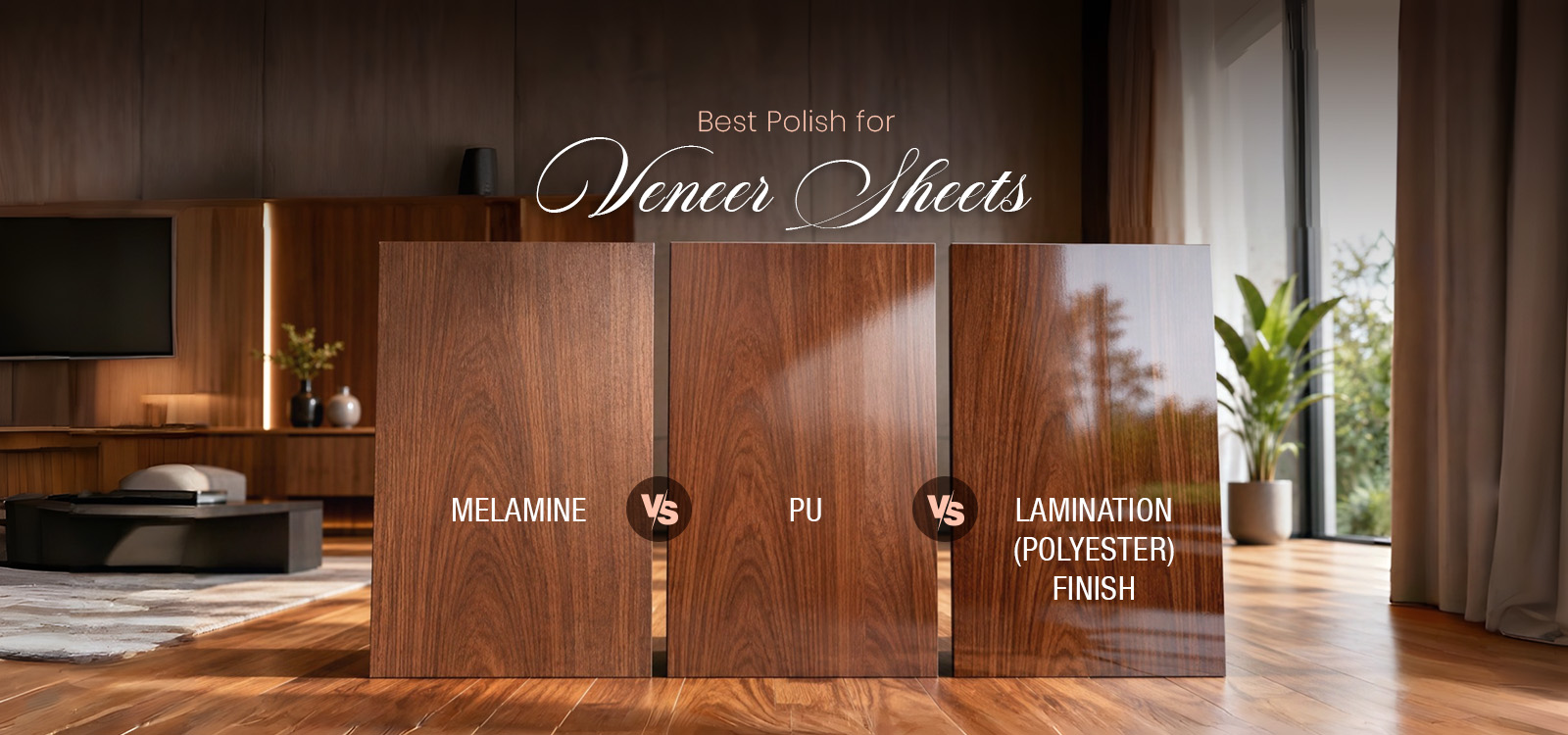
Best Polish for Veneer Sheets: Melamine vs PU vs Lamination (Polyester) Finish

The best polish for veneer sheet relies on the desired shine, durability and price. Melamine is cheaper for light use furniture. PU (Polyurethane) provides a superior protection against moisture, scratches and UV. Lamination polish or polyester provides an ultra-high gloss, glass-like finish suitable for high-end furniture and statement surfaces. For high quality interiors, choosing the proper treatment can accentuate the natural character of veneer, while offering the scratch protection needed.
Why Polishing Veneer is Essential
Veneer is a thin sheet of natural wood, so it needs to be finished properly to prevent everyday damage and ensure long-lasting veneer care. A good polish fills the pores of the wood to ensure moisture isn’t absorbed and guards the surface against dust and stains.
Polishing also brings out the grain of the wood, its depth and richness. Depending on the selected finish, one can obtain a range of sheen levels, including a subtle matte and a shiny high gloss. It also offers protection from UV exposure minimizing the risks of yellowing over a period of time.
Melamine vs PU vs Polyester (Lamination) Polish
| Feature | Melamine Polish | PU (Polyurethane) Polish | Polyester (Lamination) Polish |
| Sheen Options | Matte & Glossy | Matte, Satin, High-Gloss | Ultra-High Gloss (Glass-like) |
| Durability | Moderate | High (Scratch & Heat resistant) | Extremely High (Thick coat) |
| Waterproofing | Average | Excellent | 100% Waterproof |
| Yellowing Risk | High (yellows in sunlight) | Low (Non-yellowing PU available) | Zero |
| Application | Hand spray | Professional spray gun | Casting / Roller application |
| Best For | Budget almirahs, ceiling | Wardrobes, TV unit, wall panels | Main doors, dining tables |
Durability and usage are the main factors in the melamine polish vs PU polish choosing. Melamine is perfect where affordability is paramount, while PU provides a more durable polyurethane finish for wood veneer and higher resilience to ordinary use.
The thickest coating and the smoothest surface are provided by polyester polish. However, it tends to need more specialized application and preparation due to its superior finish.
Matte vs Glossy Veneer Polish: Styling Guide
The finish one chooses can make a difference to how a space looks.
Matte PU:
A more refined, modern look that is more subdued and lets the inherent grain be the visual centre. It is really good especially for wardrobes, wall panels and minimalist furniture.
High-Gloss Polyester:
This reflects light to provide a rich, glossy look for a more dramatic look. It’s particularly suited to statement doors, dining tables and formal interiors.
When a deep, mirror-like surface is the design goal and the search is for high gloss veneer polish in India, polyester is worth considering. Matte polish for wood veneer is often more appropriate to a more subtle, more subdued look.
Step-by-Step Professional Veneer Polishing Process
Preparation is just as important as the polish itself as it pertains to the ultimate result.
A typical professional process might include the following; for a more detailed sequence, see this step-by-step veneer staining and finishing guide:
- Surface preparation: The veneer is cleaned and inspected for any defects.
- Sanding: The surface is sanded down carefully to provide a smooth base without disturbing the thin veneer layer.
- Sealing: The pores of the wood are closed with a suitable sealer or varnish coating.
- Polish application: Apply specified finish per product specification PU is often sprayed with a professional spray application, whereas polyester requires specialized application procedures.
- Drying and curing: Each layer is allowed to cure thoroughly before moving on to the next step.
- Final finishing: The surface can be softly polished or buffed to the desired smoothness and gloss.
When learning how to polish veneer doors, it’s very crucial to follow the right method, as faulty sanding or overuse of coating might ruin the veneer.
Conclusion
The best polish for veneer sheet depends on what the homeowner wants in terms of cost, protection and aesthetics. Melamine is good for tight budgets, PU is for everyday protection and has a variety of sheen levels, and polyester is glossy and high-end. The right treatment will protect your veneer from scratches and moisture while keeping it looking great.
Choosing the correct polish and having it done by a professional will extend the life and beauty of your veneer interiors, whether the homeowner wants a delicate matte surface or a luxurious high gloss appearance.
Frequently Asked Questions
1. Which polish is best for veneer doors in India?
PU is often a suitable choice for veneer doors, because it is durable, moisture resistant and offers numerous sheen possibilities. Ultimately, the best finish is a matter of use and look.
2. What is the difference between melamine and PU polish for veneer?
Melamine is the cheapest, but has mediocre durability and water protection. PU is more scratch resistant, moisture resistant and wear resistant which makes it ideal for furniture that gets a lot of use.
3. How much does polyester lamination polish cost per sq. ft.?
The polyester lamination polish price varies depending on the size of the project, the condition of the surface, the design, and the application method. Professional application can also influence the end cost.
4. Can we polish old veneer furniture at home?
Some refinishing can be done for the minor scratches, but if one has expensive veneer furniture, then expert polishing is required. If not done properly the sanding might go through the thin veneer layer and cause irreversible damage.
5. How long does PU polish last on wood veneer surfaces?
With correct preparation, application and maintenance PU coatings will remain durable for many years. Durability will vary depending on use and exposure to sunshine, moisture and cleaning techniques.