

Veneer Edge Banding: Types, Application Methods & Colour Matching Tips

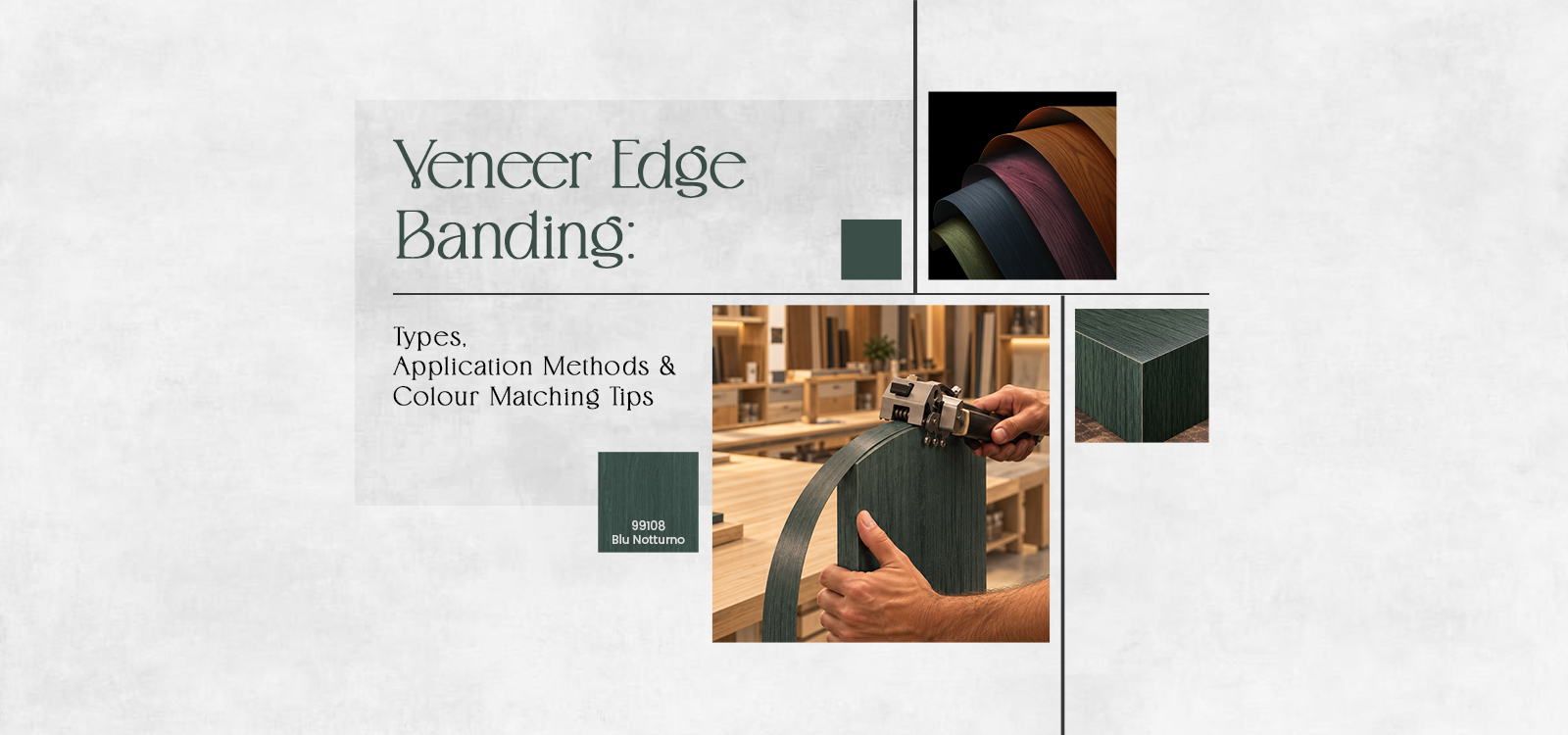
Edge banding with veneers entails making use of thin strips made of real wood veneer or PVC/ABS. The process involves placing the edge band onto the exposed edges of boards or MDF to get a neat and finished appearance. For furniture made with veneer, matching edge banding with the species and grain of face veneer is necessary as misalignment produces an unattractive end product. While the cost of pre-glued iron-on strips is around ₹8-₹20/sq ft, the cost of using raw veneer strips by a professional comes to ₹15-₹40/sq ft. Veneer edge banding helps complete the appearance of the exposed edges.
Why Edge Banding Matters for Veneer Furniture
Veneer furniture must be designed consistently. Pretty edge banding with veneers completes the overall look and protects the edges of the boards. Veneer edge banding is particularly important for edge banding for veneer furniture where the exposed edges are visible.
Types of Edge Banding for Veneer Furniture
| Type | Material | Application Method | Best For |
| Real wood veneer strip | Natural veneer (0.5mm) | Professional contact glue and press | Premium furniture, colour match |
| Pre-glued veneer tape | Veneer with hot-melt backing | Iron-on (household iron) | DIY, quick repairs, budget |
| PVC edge band | Printed PVC (0.4 to 2mm) | Hot-melt edge banding machine | Laminate furniture (not ideal for veneer) |
| ABS edge band | Printed ABS (0.4 to 2mm) | Machine application | Eco-friendly alternative to PVC |
A wood veneer edge band India supplier in India can deliver natural veneer strips made of different species and finishes. Natural veneer is a preferable choice for situations where the continuity of the genuine wood appearance is essential.
Another easier option is to use pre-glued tape for smaller purposes. This product has adhesive backing that can be made active through heating, so it is perfect for your projects.
How to Colour-Match Edge Banding with Face Veneer
A good edge banding appearance shows that the border should visually connect with the face veneer and not exist as an independent product. Veneer edge banding should provide colour-matched edging where possible.
- Always purchase edge banding from the SAME type of wood as the surface veneer.
- If it is possible to obtain the edge banding from the same flitch/batch, do it
- Treat the surface veneer and the edge banding with the same stain/polish
- Do not use a printed PVC edge banding with a natural veneer furniture (should match)
Colour matching becomes especially important when furniture has large visible edges or a clearly defined wood grain. If the face veneer uses a specific oak character, such as Sessile Prime Oak veneer, the edge strip should be selected in a compatible species, tone, and grain direction so that the border reads as a continuation of the face rather than a separate material.
Step-by-Step Iron-On Edge Banding Application
For small DIY projects, iron-on edge banding veneer could be installed with the help of an ordinary iron and simple finishing tools.
- Cut an edge banding strip that is 5mm longer than the edge
- Place the strip of veneer on the edge in the centre of it
- With the help of the iron at medium temperature, run it across the veneer until the glue melts
- Press the strip with the help of the roller while it is still hot
- Wait for 2 minutes to let it cool
- Trim the edges and excess veneer with a sharp blade or scissors
- Sand edges lightly with 220 grit sandpaper
- Apply stain/polish
While applying the veneer edge tape application it is important to move the iron slowly and evenly so that the hot melt adhesive properly adheres to the edge and does not burn the veneer. After the edge banding is in place, flush trimming makes the transition almost invisible.
Common Edge Banding Mistakes
Bad installation can ruin the aesthetics and functionality of veneer edge banding.
- Applying PVC edge band to natural wood veneer furniture (visible plastic on wood)
- Failing to trim flush – leaving a protruding flap that collects dirt
- Overheating – scorching the veneer
- Not sanding the edges – rough finish detracts from overall appeal
A raw wood edge strip also requires proper handling during cutting and application to prevent splitting or affecting the exposed grain.
When deciding on PVC vs veneer edge banding, it is crucial to observe the facing material first. PVC works for laminate-based furniture, but natural veneer usually looks better with wood.
Conclusion
Veneer edge banding is a significant finishing detail because it protects exposed board edges while completing the natural wood appearance. When selecting the face veneer and its matching edge treatment, it helps to understand the available veneer species, finishes and matching processes before the furniture is fabricated. Natural veneer strips, careful trimming, consistent staining, and accurate colour matching can then create a more cohesive finished piece.
FAQ: Frequently Asked Questions
1. What is the best edge banding for veneer furniture?
Natural wood veneer edge banding is usually the top choice when using natural veneer in furniture facing. This material guarantees a closer match in terms of species, grain, and colour than printed PVC or ABS options.
2. Can I use an iron to apply veneer edge banding at home?
Yes. Pre-glued veneer tape can be used at home with a household iron. The heat activates the adhesive ,,and the tape can then be pressed, cooled, and cut for finishing.
3. How to ensure the same colour edge band and veneer facing?
Use edge banding made from the same type of wood as the face veneer and ideally from the same batch of raw material. It is also helpful to stain both materials the same way.
4. Is PVC edge band suitable for natural veneer furniture?
While PVC edge band can be used in practice, it creates a visible difference in terms of quality between natural veneer and plastic edge. For high-quality furniture made of natural veneer, using a natural wood veneer band is usually a better option.
5. How much does one running foot of wood veneer edge band cost in India?
The cost of wood veneer edge banding varies depending on the type of material and method of application. Pre-glued veneer tape costs approximately ₹8–₹20 per running foot, while raw natural veneer strips require professional application and may cost ₹15–₹40 per foot. A wood veneer edge band India supplier can propose a variety of options based on thickness and finish. Veneer edge banding costs can therefore vary according to the material and application method.