

Back-Painted Glass vs Acrylic Sheet: Which Is Better for Kitchen Cabinets?

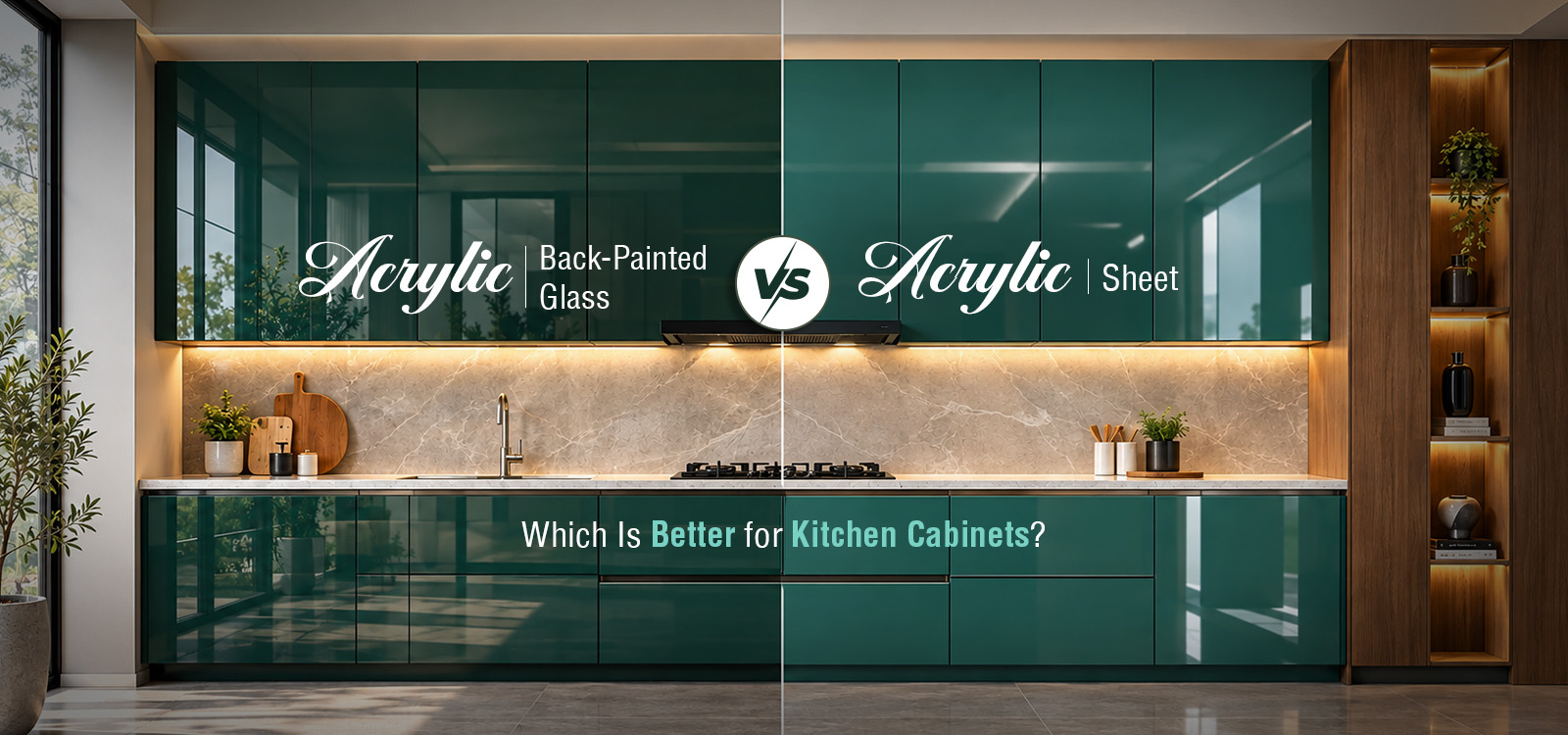
For a shiny finish on kitchen cabinets, you have two options to consider, and they are back-painted glass and acrylic sheets. Both create a smooth, glossy look for cabinet shutters, but differ in weight, scratch resistance, installation, and price. When comparing back-painted glass vs acrylic, glass is a good option for a deep, clear reflection, while acrylic is lighter, easier to work with, and generally cheaper. Back-painted glass may cost somewhere around ₹250-500 per sq. ft. Acrylic sheets may cost anywhere between ₹100-₹220 per sq. ft. Actual prices depend on the material, thickness, finish, and installation.
Understanding the Materials
Back-Painted Glass
Back-painted glass is made by applying paint to the rear side of a glass panel, leaving the front with a smooth, glossy finish. Toughened glass is commonly used for kitchen shutters, and the painted side stays protected when the panel is installed correctly. This type of lacquered glass is chosen for its smooth surface and clear reflection.
Glass shutters are usually fitted into aluminium profiles or a suitable frame. They have a clear, reflective finish that works well in modern kitchens. However, glass is heavier than acrylic, so the cabinet frame, hinges, and fittings must be able to support its weight.
Acrylic Sheet
Acrylic is a plastic material made from PMMA. For kitchen cabinets, the sheet is generally bonded to an MDF or HDMR board to create a finished shutter. It comes in many colours, including white, beige, grey,y and brighter shades.
Acrylic is lighter than glass and can be easier to handle during installation. Some varieties have a hard-coated surface that helps with scratch resistance. The sheet can still scratch or crack, depending on its quality and how it is handled, so the supplier’s care instructions matter.
Back-Painted Glass vs Acrylic: Head-to-Head Comparison
| Feature | Back-Painted Glass | Acrylic Sheet (PMMA) |
| Reflective depth | Clear, deep reflection with little visual distortion | High gloss with a near-mirror appearance |
| Scratch resistance | Generally more resistant to surface scratches | Varies by grade; some marks may be polished |
| Impact and safety | Toughened glass can still break under a strong impact | Does not break like glass, but can crack under impact |
| Weight per shutter | Heavier; suitable frames and hinges are important | Lighter; fittings depend on shutter size and construction |
| On-site modification | Toughened glass cannot normally be cut or drilled after processing | Easier to trim before or during fitting, depending on the product and installation |
| Frame requirement | Often fitted with aluminium profiles or suitable edge support | Edge banding or other finishing may be used |
| Colour range | Available in standard and custom paint shades | Available in a wide range of factory colours |
| Maintenance | Clean with a suitable glass cleaner and soft cloth | Clean with a soft microfibre cloth and an acrylic-safe cleaner |
For glass vs acrylic kitchen cabinets, the choice comes down to the finish you prefer and the way the kitchen will be used. In the back-painted glass vs acrylic comparison, glass gives a crisp reflection, while acrylic offers more flexibility in colour and is easier to handle. The refinement of reflection may matter more in a kitchen where the glossy shutters are a main design feature.
When to Choose Back-Painted Glass
- For a high-end kitchen: Glass suits kitchens where you want a smooth, reflective finish and are comfortable with the extra cost.
- For upper cabinets: It can work well on upper shutters where there is less chance of regular contact with feet, utensils, or other objects.
- For kitchen backsplashes: Back-painted glass can be used behind cooking or preparation areas when the selected product and installation are suitable for the heat and conditions. Follow the manufacturer’s guidance on distance from the hob and heat exposure.
If you are comparing the lacquered glass shutter cost with other finishes, include the glass panels, frame, hardware, and installation in your budget. The extra weight can affect the fittings required. Ask the installer to check the hinge weight load and shutter frame support before the shutters are made.
When to Choose Acrylic Sheets
- For family kitchens: Acrylic does not break in the same way as glass, which can make it a practical option in busy homes. It can still crack if hit hard, so consider shatter safety when choosing a finish for your household.
- For lower cabinets: Lower shutters and drawers are more likely to be bumped by feet, utensils,s or cleaning equipment. Acrylic’s lighter weight may be useful here.
- For a limited budget: Acrylic can provide a glossy finish at a lower starting material price than back-painted glass.
- For modular kitchens: Acrylic can be easier to trim or adjust during fitting, depending on the board and shutter construction.
When considering glass vs acrylic kitchen cabinets, also think about how often the shutters will be touched, cleaned, opened, and exposed to kitchen activity. Designers evaluating the acrylic option can browse Royale Touche kitchen cabinet acrylic sheets to compare gloss and matt colours, 2 mm solid acrylic construction, and surface specifications before choosing a finish for upper or lower cabinets.
The acrylic vs glass backsplash decision needs a little more care than choosing a cabinet shutter. The area behind a hob is exposed to heat and cooking splashes, so use only a material approved for that location. Check the manufacturer’s instructions before choosing either finish for a backsplash.
What Affects the Price?
The back painted glass cabinet price depends on the glass thickness, colour, size of each shutter, frame system, hardware, and installation. Acrylic costs also vary with sheet quality, thickness, finish, and the board used underneath. These details can make a difference when comparing back painted glass vs acrylic for the full kitchen.
When asking for a lacquered glass shutter cost, request a quotation that separates material, framing, hinges, and fitting charges. Compare it with a complete acrylic shutter quotation rather than comparing only the price per square foot. This makes the modern kitchen shutter comparison more useful when planning the total kitchen budget.
For reflective kitchen shutters in India, both finishes can work in contemporary kitchens, but the wider material decision should include weight, repairability, maintenance, colour choice, and cabinet location. Royale Touche’s acrylic vs PU finish vs laminate kitchen guide gives additional context on where acrylic sits among other modern cabinet finishes when planning a full kitchen.
Conclusion
Back-painted glass and acrylic are both good options for kitchen cabinets. It is ultimately a matter of finances, the finish one wants, and the placement of cabinets. If you are looking for a material with high reflectivity and a surface resistant to daily scratches, glass might be your option. On the other hand, if you want lighter cabinet materials in various colours while spending less money, acrylic might be the right choice. Before making a final decision, look at pattern samples and ask for a price estimate.
Frequently Asked Questions
1. Is back-painted glass more expensive than acrylic for kitchen cabinets?
It is generally more expensive at the material level. Back-painted glass may cost around ₹250–₹500 per sq. ft., while acrylic may range from ₹100–₹220 per sq. ft. These are indicative ranges; the final price depends on the product, size, framing, hardware, and installation.
2. Can acrylic sheets break or shatter like glass?
Acrylic won’t break like glass, but it’s not indestructible either. It can crack with a strong impact or improper installation. Ask your supplier about the sheet’s impact resistance and suitable use.
3. Which looks glossier — lacquered glass or acrylic sheet?
Back-painted glass usually gives a clearer, deeper reflection. Acrylic also has a high-gloss finish, but the appearance varies by product and surface quality. Compare physical samples under your kitchen lighting before making a decision.
4. Is glass or acrylic better for kitchen lower cabinets?
Acrylic can be a practical choice for lower cabinets because it is lighter and easier to handle. Glass may suit you if scratch resistance and a crisp reflection are higher priorities. In either case, the shutter construction and fittings need to suit the cabinet.
5. How do you clean back-painted glass vs acrylic cabinet doors?
Clean with a soft cloth and a suitable glass cleaner. For acrylic, clean with a microfibre cloth and a cleaner approved for acrylic. Avoid rough scrubbers, and follow the supplier’s cleaning instructions for the specific finish.