

Click-Lock vs Glue-Down vs Nail-Down Flooring: Which Installation Method Is Right?

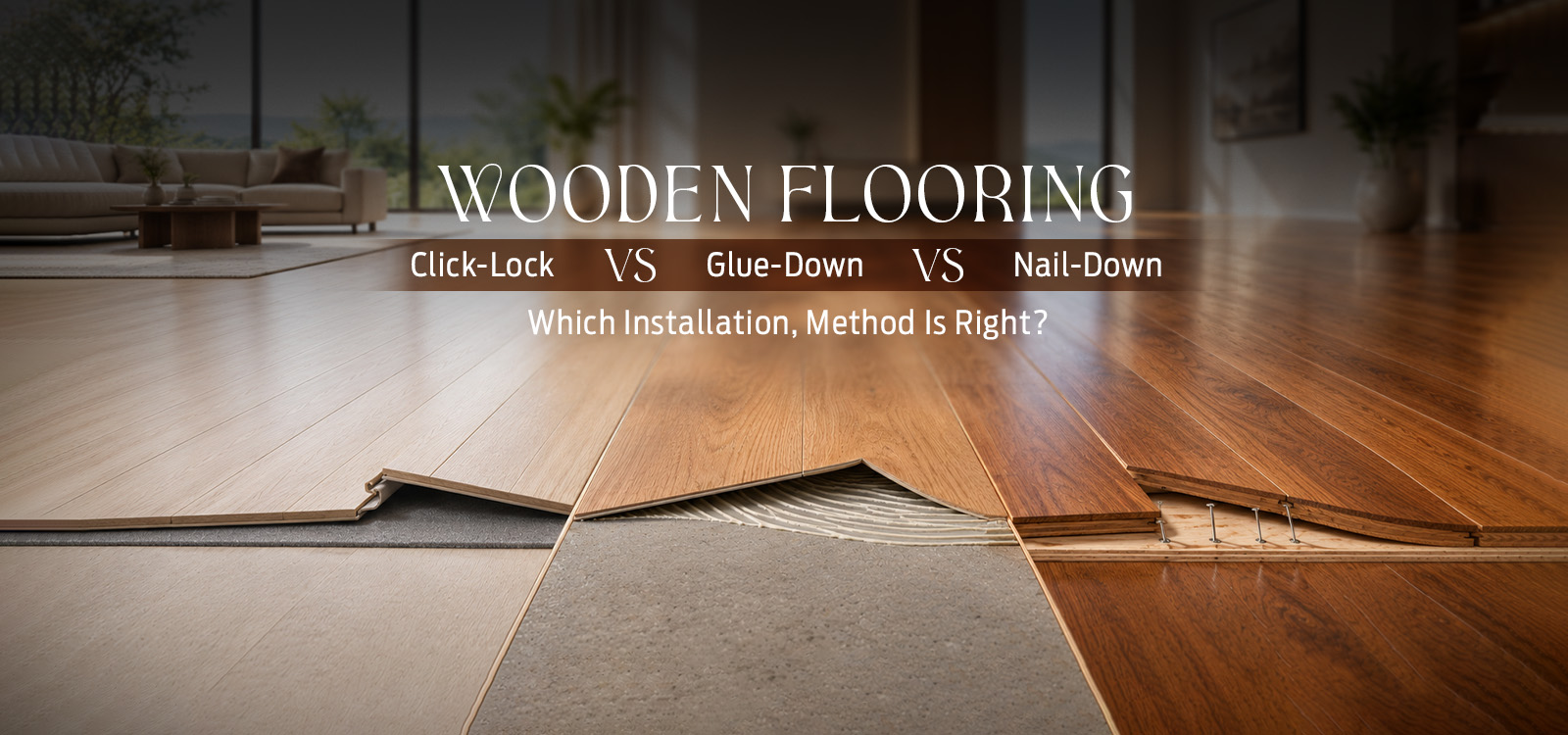
Choosing wooden flooring involves more than picking a colour or wood finish. The way the planks are installed affects how the floor feels, how long the work takes, and whether the flooring can be removed later. Click-lock flooring is a practical choice for quick renovations, glue-down flooring gives a firm feel underfoot, and nail-down flooring is commonly used for solid hardwood on wooden subfloors. Click lock vs glue-down flooring is an important comparison when deciding which method suits your space.
Comparison of All Three Wood Flooring Installation Methods
A wood floor installation methods comparison makes it easier to see which option suits your home, budget, and existing floor. This wood floor installation methods comparison also helps explain the differences between click-lock vs. glue-down flooring and nail-down installation.
| Feature | Click-Lock (Floating) | Glue-Down | Nail-Down |
| How it works | Planks lock together and sit over an underlay | Planks are fixed to the subfloor with adhesive | Planks are fastened to a suitable wooden subfloor |
| Suitable flooring | Engineered wood, laminate and SPC, depending on the product | Engineered wood and some solid wood or parquet products | Solid hardwood and compatible engineered flooring |
| Installation time | Often 1–2 days for 500 sq. ft., depending on site conditions | Often 2–3 days, plus adhesive curing time | Often 3–5 days, depending on the floor and subfloor |
| Feel underfoot | May feel slightly flexible | Generally firm and stable | Firm, traditional feel |
| Can it be reused? | Often, if the planks can be removed without damage | Usually difficult to remove and reuse | Removal can damage planks or fasteners |
| Water and spills | Water can enter joints if spills are left unattended | Depends on the adhesive, flooring and moisture protection | Depends on the finish, joints and moisture conditions |
| Sound | Underlay can reduce some footstep noise | Direct bonding can reduce hollow sounds | Depends on the subfloor and installation quality |
| Subfloor | Level tile, concrete or plywood, if approved for the product | Suitable, smooth and dry subfloor | Suitable wooden subfloor or approved timber support |
| Installation cost | Usually lower labour cost | Higher due to adhesive and preparation | Can cost more because of labour and subfloor requirements |
The exact result depends on the flooring product and the condition of the subfloor. This wood floor installation methods comparison is a starting point, not a substitute for the manufacturer’s installation instructions.
A Closer Look at Each Installation Method
1. Click-Lock (Floating) Installation
Click-lock planks fit together along their edges using a compatible locking system and sit as a floating floor over an approved underlay. Royale Touche’s Pavimento wooden flooring system uses the Megaloc fold-down quick-laying system, making it a useful reference when comparing modern floating-floor installation with more permanent glue-down or nail-down methods.
Best for: Apartments, rented homes,s and renovations over existing tiles where the flooring manufacturer permits installation.
Advantages
- Installation is usually quick, with little mess.
- Individual planks may be replaced if the locking system allows access.
- The floor can often be dismantled and reused if the planks remain undamaged.
- No floor adhesive or nails are needed for the floating installation itself.
Things to consider
- Uneven flooring can cause movement, noise,se or gaps between planks.
- Poor-quality or unsuitable underlay may make the floor feel hollow.
- Expansion space is needed around walls and fixed objects.
When weighing click-lock installation pros and cons, check the locking system, underlay requirements, and the condition of the existing floor. Click-lock is often a convenient choice, but it still needs proper preparation. Its reusability can also be useful when the flooring may need to be removed later.
2. Glue-Down Installation
With glue-down flooring, the planks are bonded directly to a prepared subfloor. The installer spreads a suitable adhesive and fits the planks according to the product instructions. A compatible polyurethane floor adhesive may be used for certain flooring systems.
Best for: Commercial areas, large rooms and homes where a firm feel underfoot is a priority.
Advantages
- The floor generally feels solid and stable.
- Direct bonding can reduce the hollow sound sometimes heard with floating floors.
- It can suit large spaces when the flooring and subfloor are compatible.
Things to consider
- The subfloor needs careful preparation and must meet moisture requirements.
- Adhesive adds to material and labour costs.
- Removing glued planks can be difficult and may damage the flooring or subfloor.
- The adhesive must be allowed to cure as directed.
The choice between floating floor vs glue down engineered wood often comes down to the feel underfoot, the subfloor, and whether future removal matters. Glue-down is not automatically waterproof; moisture protection depends on the complete flooring system. When comparing click-lock vs glue-down flooring, consider the cost of adhesive and the difficulty of removing glued planks.
3. Nail-Down Installation
Nail-down flooring is fitted by fastening planks to a suitable wooden subfloor. Special flooring nails or cleats and joists may form part of the installation, depending on the construction of the floor. This method is commonly associated with solid hardwood.
Best for: Independent homes and projects using solid hardwood over a compatible wooden subfloor.
Advantages
- Creates a firm, traditional hardwood floor.
- Solid hardwood can often be sanded and refinished several times, depending on its thickness and condition.
- The fastening system provides a secure fixing when installed correctly.
Things to consider
- It is not suitable for direct installation over a concrete slab or tiles without an appropriate supporting structure.
- Installation takes more time and requires specialist tools.
- Poor fixing or movement in the subfloor can lead to squeaks. This subfloor movement should be addressed before the planks are installed.
The nail-down hardwood flooring process requires a suitable wooden base, correct fasteners and careful plank placement. Solid hardwood is not automatically suitable for every room, particularly where moisture levels are difficult to control.
How to Pick the Right Method for Your Home
The best installation method for wooden flooring depends on where the floor will be installed, the existing subfloor and whether the flooring needs to be removed in the future. The choice between click-lock vs glue-down flooring also depends on whether easy removal or a more permanent installation matters most.
| Living situation | Recommended method | Why |
| Apartment tenant or renter | Click-lock | Often easier to dismantle and remove |
| High-rise apartment owner | Click-lock, where suitable | Quick installation with less disruption |
| Luxury independent villa | Glue-down or nail-down, depending on the floor | Can provide a firm, long-term finish |
| Retail shop or office lobby | Glue-down, if approved for the flooring and expected traffic | Direct bonding can suit busy areas |
For many apartments, click-lock is a sensible starting point. For a more permanent installation, glue-down may be worth considering. Nail-down is best reserved for flooring and subfloor systems designed for mechanical fixing.
Before making a decision, compare click-lock and glue-down flooring in relation to the room, subfloor condition, moisture requirements, future repairs, and whether easy removal matters. Royale Touche’s wooden flooring installation guide covers subfloor preparation, moisture barriers, underlayment, expansion gaps, and the differences between click-lock, glue-down, and nail-down installation.
Frequently Asked Questions
1. What is the difference between click-lock and glue-down wooden flooring?
Click-lock planks join together and sit over an underlay, while glue-down planks are bonded directly to the prepared subfloor. Click-lock is usually easier to remove; glue-down generally feels firmer underfoot.
2. Which wooden floor installation method is cheapest in India?
Click-lock is often the lowest in installation labour cost as it requires no adhesive or nails. The total price still depends on the flooring, underlay, surface preparation, and labour rates.
3. Can click-lock flooring be glued down if desired?
Only if the flooring maker specifically approves of that method. Glue can interfere with the locking system or prevent the floor from moving as designed.
4. Does click-lock wooden flooring squeak over time?
It can, particularly if the subfloor is uneven, the planks are not locked properly,y or the underlay is unsuitable. Proper preparation can lower the risk. The difference between glued vs floating floor squeak depends on the product, subfloor, and quality of installation.
5. Can solid wood flooring be installed using the click-lock method?
Some engineered woods come with click-lock systems, but traditional solid hardwood usually requires another approved fixing method. Check the flooring specifications before choosing the installation system.