


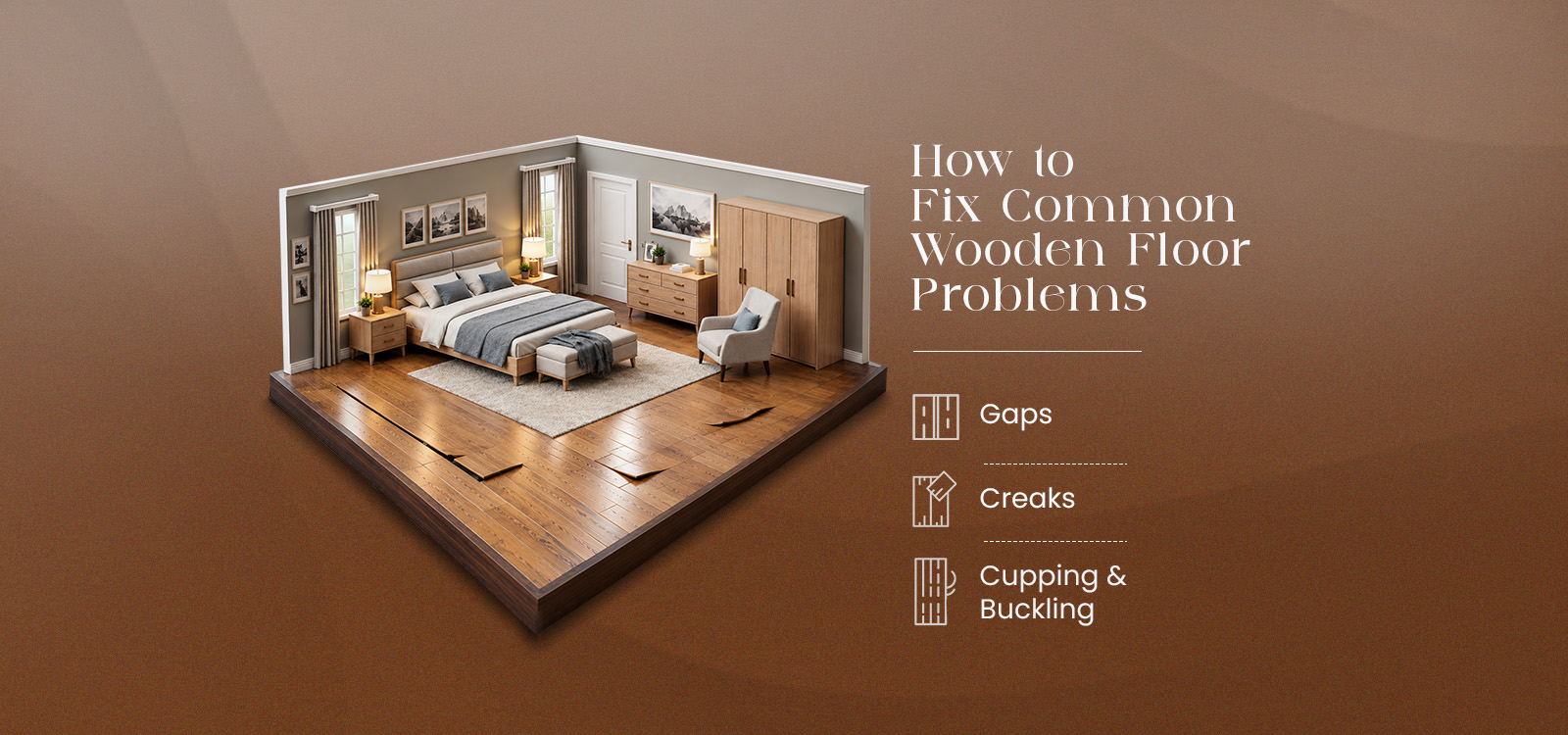
How to Fix Common Wood Floor Problems: Gaps, squeaking, Cupping, and buckling

A wood floor looks great when it’s first installed, but after a few months you may begin to notice some small changes. You might notice spaces between planks, squeaking noise as you walk across the room, or a piece that is not flat anymore. These changes can be frustrating, especially when the floor is still relatively new.
The good news is that not every problem means you need a new floor. Some issues are minor, while others need attention before they get worse. The best wooden floor problems solutions depend on what is causing the damage in the first place.
Why Does Wooden Flooring Change Over Time?
Wood reacts to moisture in the air. During dry weather, it loses moisture and shrinks slightly. When the air becomes humid, it absorbs moisture and expands. A little movement is normal, but problems can develop if the floor has not been installed correctly or cannot expand freely.
This is worth keeping in mind in India, where the weather can change quite a bit between summer, winter, and the monsoon. Wood flooring humidity problems in India may show up as gaps during dry months or swollen boards during humid weather. Water leaks, damp floors and poor ventilation can also cause trouble at any time of the year.
1. Spaces between wooden floorboards
You see thin lines forming between your floorboards? If you notice them more in the winter or when you’re running the air conditioner, the problem could be dry air. Wood shrinks as it loses moisture, leaving small spaces between the planks.
However, gaps can also develop because of loose boards, poor installation, or movement underneath the floor.
How to fix the gaps
Before reaching for a filler, check whether the gaps are small and seasonal or large enough to affect the floor’s appearance and stability. Small gaps may close when the humidity changes again, so there may be no need to do anything immediately.
For gaps that remain, a suitable color-matched wood putty can sometimes improve the appearance. It is not a fix for every situation, though. If the boards keep moving, the filler may crack or come loose.
If you’re looking at how to fix gaps in wooden flooring, start by finding out why they appeared. Filling them without addressing the cause may only give you a temporary result. This is one of those wooden floor problem solutions where waiting and checking the conditions first can prevent unnecessary work.
2. A Wooden Floor That Squeaks
A floor that creaks every time someone walks across it can quickly become irritating. You may hear it near the bed, beside a cupboard, or along a particular path through the room.
The sound usually comes from two surfaces rubbing together. A board may be moving against another board, or the flooring may be rubbing against a loose subfloor or fastener.
What can you do about it?
Walk slowly around the place and try to find out exactly where the noise is coming from. If the problem is caused by loose boards or movement underneath, the affected section may need to be secured.
For a small squeak caused by friction between boards, the talcum powder trick may help. Sprinkle a little powder into the joint and clear away the excess. This is only a temporary measure, however. It will not fix a loose board or an unstable subfloor.
A proper wooden floor squeak repair depends on where the sound is coming from. Avoid hammering nails or driving screws into the floor without knowing what lies beneath it.
3. Cupping and Crowning
Sometimes wooden boards stop looking flat, even though they have not lifted away from the floor. Look closely at the surface. If the edges are higher than the middle, the floor may be cupping. If the middle is higher than the edges, it may be crowning.
Understanding the difference between cupping and crowning in wood floor damage can help you understand what may have happened. Cupping often has to do with uneven moisture in the top and bottom of the boards. Crowning can happen when the upper surface absorbs more moisture or when a cupped floor is sanded before it has dried properly.
How should you deal with it?
Don’t start sanding the boards just because they look uneven. First, check for leaks, dampness, and moisture beneath the flooring. The floor may need time to dry before anyone can decide whether sanding or another repair is suitable.
If the room stays damp, dehumidifier moisture control may help keep humidity at a more stable level. It will not solve a leak or moisture coming from below the floor, though.
In this situation, the right wooden floor problem solutions begin with fixing the moisture issue. Making the surface look flat without dealing with the cause can lead to the same problem returning.
4. Buckling and Raised Floorboards
Buckling is harder to ignore because part of the floor may lift, form a ridge, or rise noticeably underfoot. This can happen when the boards absorb too much moisture or have no room to expand. A plumbing leak or water spilling onto the floor can make matters worse.
Laminate flooring can also lift when its edges are pressed together as the material expands.
How to fix a buckled floor
If you’re searching for how to fix a buckled laminate floor, don’t try to push the raised section back into place. First, identify the source of moisture and check whether the floor has enough expansion space around its edges. Touche’s wooden flooring care and troubleshooting guidance also explains how prolonged water exposure can cause swelling and why correct installation, acclimatisation, and subfloor preparation matter when preventing warping or buckling.
Some wooden boards can be repaired after the area has dried properly. Laminate planks that have swollen or lost their shape often need to be replaced. In more serious cases, plank replacement may not be enough if the subfloor underneath has also been damaged.
If you need to repair a water-damaged wooden floor, get the affected area checked before covering it with new flooring. The surface may feel dry while moisture remains trapped underneath.
A Few Ways to Avoid These Problems
You cannot stop wood from responding to changes in weather, but choosing a flooring system designed for everyday moisture exposure can reduce avoidable problems. Options in the Royale Touche AURASTEP flooring range include AC5-rated Waterlock designs, which can be considered when durability and added moisture protection are priorities. Proper installation and prompt spill clean-up are still essential.
- Wipe up spills as soon as you notice them.
- Check for leaks around windows, balcony doors, and plumbing, particularly during the monsoon.
- Keep rooms ventilated and avoid sudden, extreme changes in temperature and humidity.
- Use cleaning products recommended for your flooring.
- Make sure the installer leaves enough expansion gap clearance around the edges.
- Check that the subfloor is dry before new flooring is installed.
These simple checks can make a difference. Many wooden floor problems solutions involve dealing with moisture early, rather than waiting until the boards start lifting or separating. Choosing the right wooden floor problems solutions can also help you avoid unnecessary repairs.
Frequently Asked Questions
Why do gaps appear between wooden floorboards?
Wood loses moisture in dry conditions and shrinks. Small gaps may close again when humidity rises. If the gaps stay open or become wider, the floor should be checked.
Can a squeaky wooden floor be fixed without replacing it?
Yes, frequently. This repair could be tightening up loose boards or repairing movement under the floor. The right approach depends on what is causing the sound.
Is sanding enough to fix a cupped wooden floor?
Not always. The moisture problem needs to be addressed first, and the boards should be allowed to dry. Sanding too early can leave the floor uneven once the moisture levels change.
Does a buckled floor always need replacement?
No. The extent of the damage matters. Some wooden flooring can be repaired, while badly swollen laminate boards may need replacing. The subfloor should also be checked.
How much does wooden floor repair cost in India?
There is no single price for every repair. Fixing a few loose boards is different from replacing flooring damaged by a leak. The final cost depends on the material, the area affected, labour,and whether the subfloor needs attention. Getting the damage inspected is the best way to receive a realistic estimate.