

How Laminates Are Manufactured- Step-by-Step Process

Laminates are an integral part of modern home and office interiors, given its durability, visual appeal and easy to care and maintain benefits. From modular kitchens and wardrobes to wall panels and office furniture, laminates provide premium finishes at rather affordable prices. But have you ever wondered how laminates are manufactured or what goes into making these premium-quality surfaces?
What are laminates?
Laminates are multi-layered protective surfaces that’s manufactured using kraft paper in the centre, followed by a decorative layer on top in different colors, designs and finishes. At the final layer, they have a protective overlay that provides resistance to moisture, scratches and stains. These sheets are then glued to one another under high pressure and heat to form a thick sheet of laminate, which later is used on MDF, plywood, or particleboard.
Laminates are used in kitchens, wardrobes, doors, and several other furnishing needs at both home and office. Premium brands like Royale Touche offer laminates in a wide range of textures, colors, and finishes that match the interior trends of today.
Step 1: Selection of Raw Materials
Laminate manufacturing process starts with procurement of quality raw materials that include high-quality Kraft paper, decorative paper in a variety of designs, and overlay paper treated with melamine resin for scratch and heat resistance.. Selecting superior quality raw materials ensures better longevity and durability.
Step 2: Resin Treatment
The kraft paper needs to be impregnated with a phenolic resin for strength and water resistance, while the decorative and overlay papers are treated with melamine resin to render them heat-, scratch-, and stain-resistant. Proper resin treatment retains their structure and appeal for a long period of time..
Step 3: Drying the paper
After treatment, the papers are dried to the correct moisture content. Drying under controlled conditions avoids warping and uneven thickness. A completely dried paper is capable of withstanding high pressure applied at the time of pressing.
Step 4: Pile Assembly
The dried kraft is stacked in sequence with decoration and overlay papers. Composing the core of several layers of kraft paper, followed by a decorative layer, and on top is the protective overlay.
Proper lamination with appropriate thickness gives a strong and long-lasting laminate sheet with an attractive look.
Step 5: High-Pressure Pressing
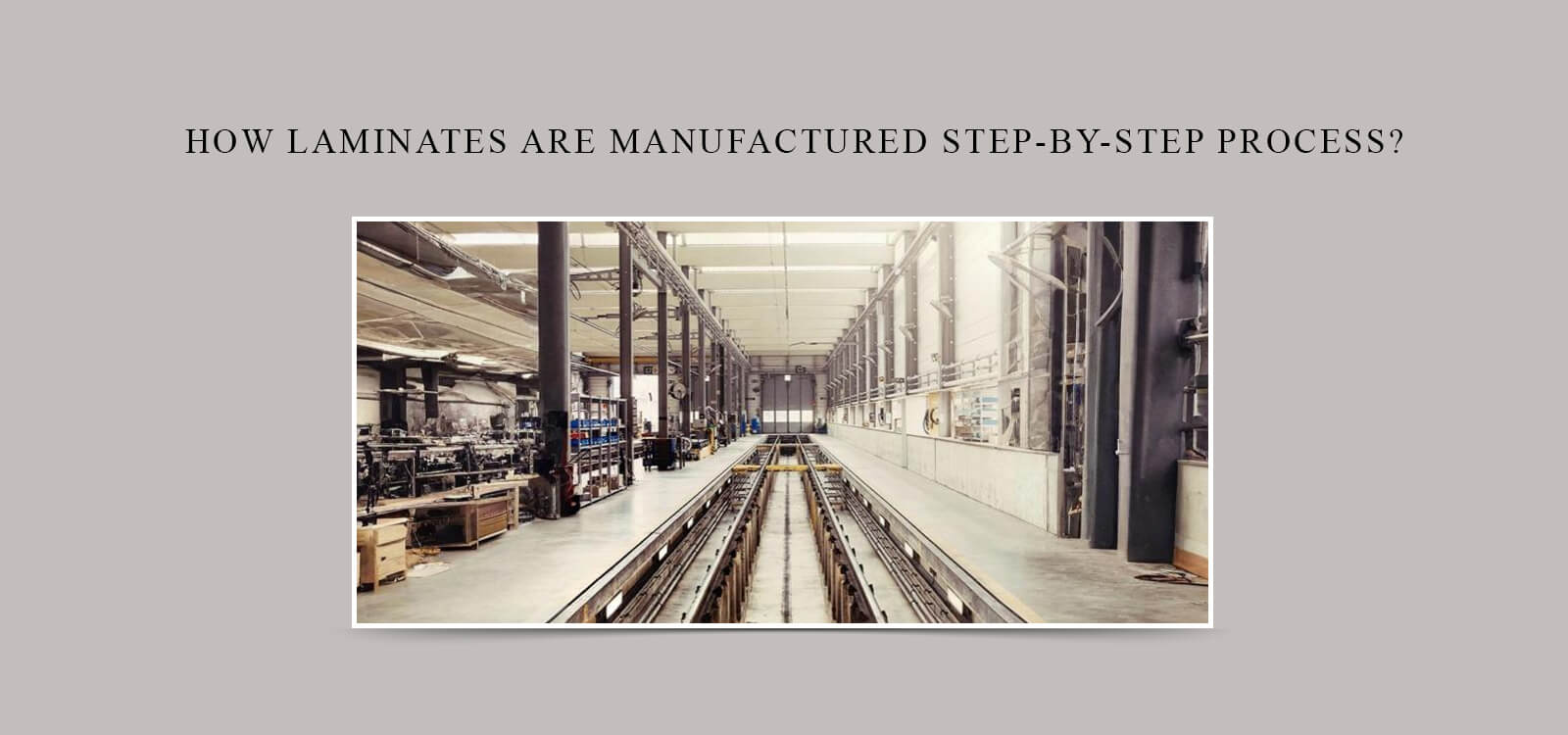
Following this, the stacked sheets undergo high-pressure laminate press under heat and pressure resulting in papers to bond. The temperatures can reach up to 150°C
Step 6: Cooling and Trimming
The sheets must be cooled after pressing to stabilise the structure. They are then trimmed to standard sizes for uniformity and ready application. At this stage, the sheets are also checked for any defects like bubbles, variation in thickness, and any surface defects as part of a quality check. The quality check is so stringent that no defective laminate ever reaches the market.
Step 7: Surface Finishing
The last process is surface finishing. These laminates are finished to provide different finishes like glossy, matte finish, textured, embossed to allow customers to choose what best suits their need, while enhancing durability, longevity and visual appeal. Premium laminate manufacturer in India also apply UV protection or anti-fingerprint coatings to meet modern interior requirements, including Royale Touche making the sheets ready for residential and commercial uses.
Applications of Laminates
Once manufactured, laminates serve a number of interior uses:
Kitchen: Generally, cabinets and countertops do benefit from moisture- and heat-resistant laminates.
Wardrobes: Laminates provide scratch resistance and elegance.
TV Units & Wall Panels: Laminates are used to elevate interior décor and make the room appear classy.
Office Furniture: The laminates are durable yet give professional finishes.
Doors and partitions: Laminates offer better resistance, better looks, and ease of cleaning. Besides the ease of installation and maintenance, the versatility of laminates is what makes them favored in modern interiors.
Why Understanding the Process Matters
Knowing how laminates are manufactured helps the homeowner or designer understand the quality, durability, and suitability for particular areas. For instance, laminates that offer moisture resistance are best suited for bathrooms and kitchens, while those that are resistant to heat can be used in kitchens. Brands like Royale Touche depend upon exclusive raw materials, perfect stacking of layers, and superior finishing techniques in order to result in long-lasting and stylish laminates for the modern home. It is quite interesting to see raw kraft papers and decorative layers turn into finished and resilient laminates. The manufacturing process of laminates ensures aesthetic value, durability, resistance to scratches, stains and moisture.
Homeowners upon knowing how sunmica is made can make informed decisions when selecting laminates for kitchens, wardrobes, TV units, or office furniture. Reputed laminate manufacturer in India like premium brands such as Royale Touche provide stylish, durable, and low-maintenance laminates to suit every décor theme.
Frequently Asked Questions
1. Can all laminates be used in wet areas?
Only high-pressure laminates with melamine overlays can be installed in kitchens and bathrooms. Low-pressure laminates cannot tolerate a moist
2. How long is the production of laminate?
Each of the laminate production processes, right from resin treatment to final finishing, may take several hours according to thickness and type.
environment.
3. What is the difference between regular and luxury laminates?
The luxury laminates have superior textures and finishes, with enhanced scratch, stain, and water resistivity. These give a more elegant appearance.
4.Are laminates friendly to the environment?
Most lamination sheet manufacturers use environmentally friendly resins and sustainable kraft paper. Top companies follow environmental regulations to reduce waste and, by extension, toxic emissions.
5. Can laminate sheets be customized?
Yes, laminates can be produced in custom colors, patterns, and textures for unique interior designs.