

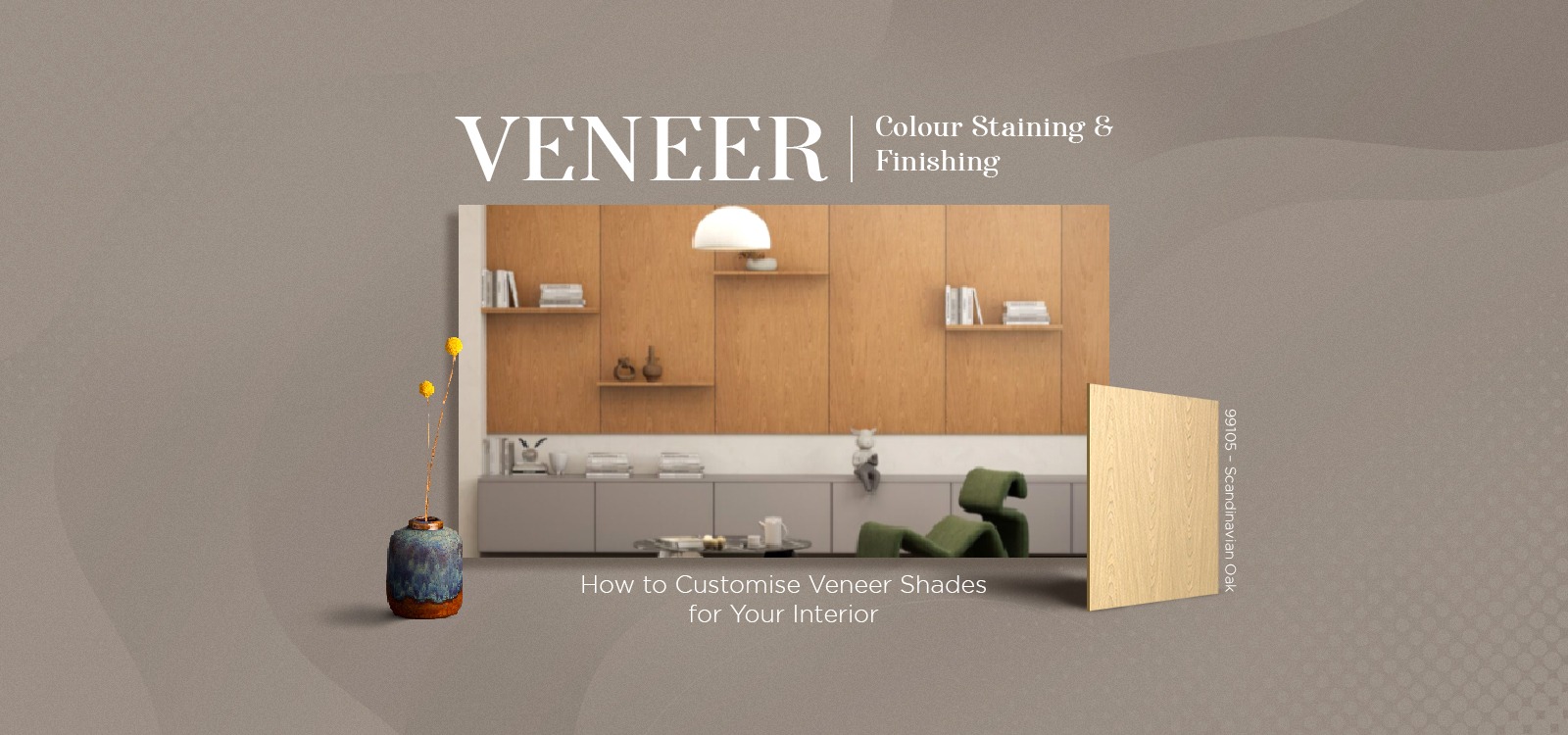
Veneer Colour Staining & Finishing: How to Customise Veneer Shades for Your Interior

Even after the veneer has been affixed, the colour of your furniture or overall theme is not quite in harmony. Interior design frequently encounters this obstacle, necessitating veneer staining and finishing. It permits the customisation of tones, the enhancement of grain, and the coordination of a uniform appearance throughout the space.
Why Stain Veneer Instead of Buying Pre-Finished Sheets?
More options are available when veneer staining and finishing are selected over pre-made items:
- Colour matching: Complements current furnishings or décor
- Custom shades: Create a custom veneer colour that is appropriate for your space.
- Grain enhancement: Emphasises the natural textures to achieve a more luxurious appearance
Learn how to stain veneer sheets to keep everything uniform when working with many panels. As opposed to finishing, staining gives more control with your idea.
Types of Veneer Stains and Finishes
Coatings can change how long veneer staining and finishing last and how they look.
| Finish Type | Appearance | Durability | Drying Time |
|---|---|---|---|
| Water-based stain | Light, natural | Good | 1–2 hours |
| Oil-based stain | Rich, deep | Very good | 6–8 hours |
| Lacquer finish | High gloss | Good | 30 min |
| PU (Polyurethane) | Satin–gloss | Excellent | 4–6 hours |
| Melamine finish | Matte–satin | Good | 2–3 hours |
| Natural oil | Matte, organic | Moderate | 8–12 hours |
Oil-based stains go deeper for darker colours, but water-based stains dry faster and are better for the environment. There are numerous veneer wood finish options, each meeting a particular aesthetic and durability requirement.
There are three main veneer polish types in India: PU, melamine, and lacquer. Each of these polishes is ideal for a specific purpose.
Step-by-Step Guide to Staining Veneer at Home
To stain and varnish veneer sheets, use this simple process:
- Sand lightly
Use 220-grit sandpaper to smooth the surface - Apply conditioner
Ensures even absorption of stain - Apply stain evenly
Use a lint-free cloth or brush - Let it penetrate
Allow 5–15 minutes depending on depth required - Wipe excess stain
Prevents blotchy patches - Apply sealer coat
Locks in colour and prepares for finishing - Add top coat
Use PU, lacquer, or melamine for protection
Step-by-step veneer staining and finishing ensures consistency, even for beginners.
It also helps to first understand the right veneer sheet thickness for your project, as thicker veneers allow for more sanding and refinishing flexibility.
PU Finish vs Lacquer vs Melamine — Which Is Best?
For veneer staining and finishing, selecting the appropriate top coat is of the utmost importance:
- PU Finish: Highly durable, scratch-resistant, ideal for wardrobes and tables
- Lacquer: High-gloss, quick-drying ornamental panel material
- Melamine: Affordable matte-to-satin finish
PU is a popular veneer wood finish option for high-use furniture due to its longevity and quality. The choice of finish also depends on the type of veneer being used. Understanding the different types of veneer sheets available, from natural to engineered, helps in selecting the most compatible top coat for lasting results.
Popular Custom Veneer Shades for 2026 Indian Interiors
Modern veneer staining and finishing methods bring forth subtle, harmonising tones.
- Honey Oak: Light and inviting
- Dark Espresso: Rich and bold
- Grey Wash: Modern and subtle
- Whitewashed Oak: Soft and minimal
- Ebony Black: Strong and dramatic
These tones create a custom veneer colour that matches modern home design trends while keeping wood’s natural beauty.
The selection of a veneer is not sufficient to achieve the desired finish; the subsequent treatment of the veneer is also crucial. Veneer staining and finishing can be performed in a manner that ensures the longevity of veneers, enhances their character, and regulates their colour. Staining offers more design options than pre-finished sheets and enables for more delicate tones and bolder finishes. If done right, it will give your decor regularity and personality. Creating places that have a sense of being finished and well thought out is made much simpler with the assistance of dependable solutions such as Royale Touche, which make it much simpler to achieve a polished and consistent finish.
Frequently Asked Questions
1. Can you stain veneer sheets to change their colour?
Veneer staining and finishing provides colour customisation.
2. Which stain is better—oil-based or water-based?
Water-based stains dry faster, whereas oil-based ones are darker.
3. How to apply PU polish on veneered furniture?
After colouring and sealing, PU is evenly coated and cured for a polished look and feel.
4. What is the cost of veneer staining in India?
Prices vary according to the thickness and the finish type.
5. Can reconstituted veneer be stained?
Reconstituted veneer can be stained although results may differ from natural veneer.