


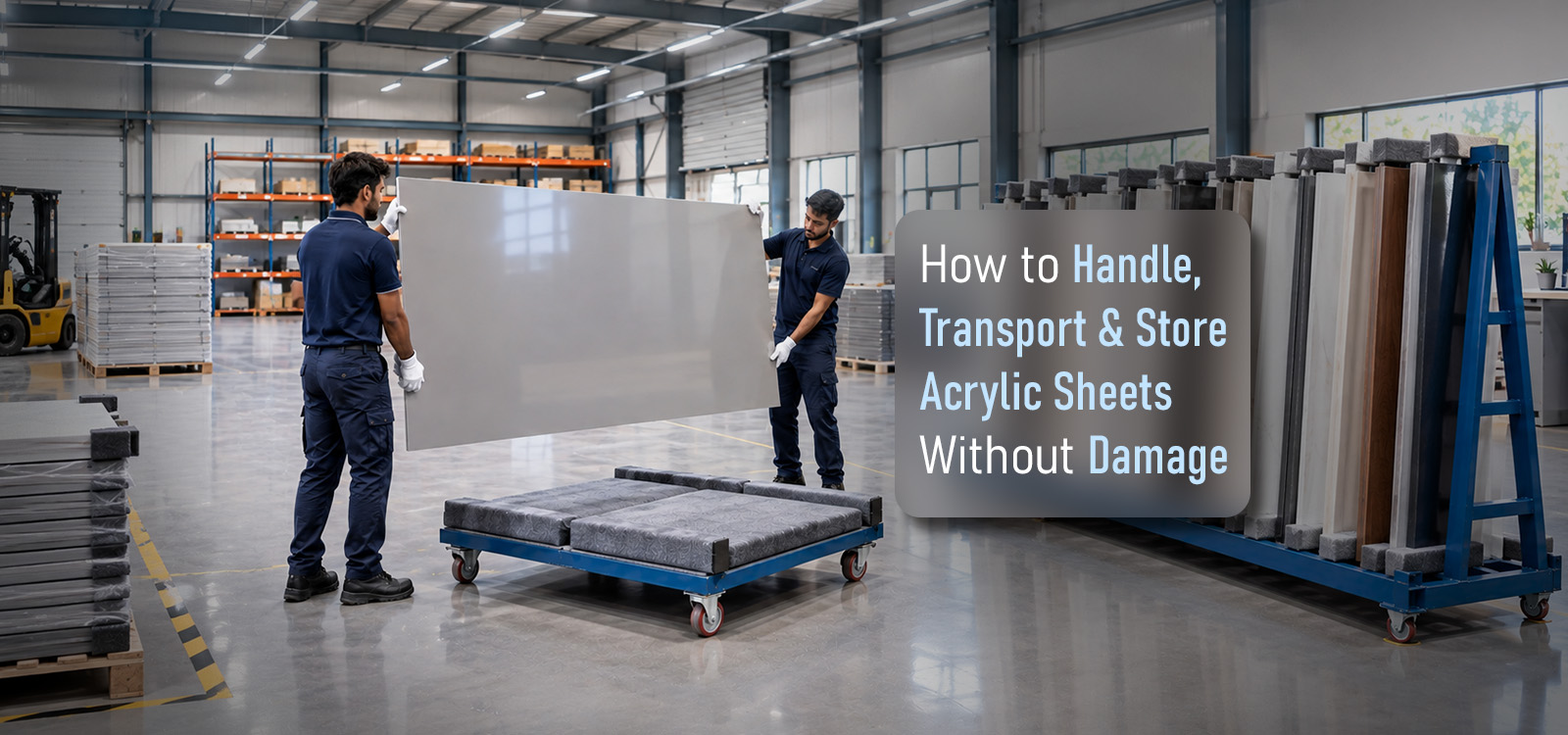
How to Handle, Transport & Store Acrylic Sheets Without Damage

Understanding the proper methods of handling acrylic sheets is crucial due to the premium quality of acrylic material, having a high gloss surface. This means that the surface is prone to micro-scratches, marks, and chips if proper care methods are not employed while handling, transporting, and storing the sheets on-site. Another thing that can greatly prevent possible acrylic complaints is keeping the PE protective film intact all the time until the installation is complete. Moreover, storing the sheets flat instead of leaning them and using foam spacers during transportation can greatly minimise the risk of damage to the sheets before the installation. Following proper acrylic sheet damage prevention practices is also important.
Why Acrylic Sheets Are Prone to Handling Damage
Just like any desirable thing, acrylic sheets have to be handled carefully because of their tendency to show each and every small mark on their glossy surface. It is especially important to consider the necessary protocols for handling acrylic sheets when moving around large sheets or thin sheets of 1mm.
- A very glossy surface can easily carry visible micro-scratches.
- The surface has a static cling that attracts dust and dirt.
- Thin sheets (1mm) can bend easily = risk of cracking corners.
The combination of an ultra-glossy surface and static cling makes careful handling especially important. Designers and fabricators working with Royale Touche solid acrylic sheets should keep the protective film intact during movement, avoid dragging sheets across dusty surfaces, and support larger panels properly so that the finish and edges remain protected before installation.
8 Golden Rules for Handling Acrylic Sheets
- Never peel off the protective PE film until the installation of sheets and the cleaning of the room is completed.
- Always raise the sheets instead of dragging them on the surface.
- When transporting 8×4 ft sheets, make sure that there are two people to carry each end.
- Use cotton gloves to avoid grease from fingerprints or
- Do not place sheets face down on dirty surfaces.
- Never pile up more than 15 sheets vertically.
- Keep clear from heat sources (sun may damage acrylic).
- Do not put tape on the acrylic surface (it would leave residue).
These rules offer us knowledge on how to handle acrylic sheets during installation and movement. It is also a wise decision to leave the protective film on an acrylic sheet until the time when installation takes place in order to prevent dust, fingerprints and scratches. Understanding how to handle acrylic sheets correctly can reduce the risk of unnecessary surface damage.
Transport Guidelines
| Means of transport | DO | DON’T |
| Truck/tempo | Lay flat on padding and secure with straps | Do not leave it unsupported or upright |
| On-site | Use edge grips and gloves | Do not drag it along the floor/walls |
| Between floors | Use a freight lift with padding | Do not carry it by stairs (there is a risk of bending) |
It is essential to follow the guidelines connected with how to handle acrylic sheets, especially when carrying non-standard sheets made of the above-mentioned material. The probability of acrylic sheet scratches during transport rises if the sheets are carried improperly or are placed on a rough surface. Knowing how to handle acrylic sheets during transportation is therefore essential.
Storage Best Practices
| Factor | Correct Practice |
| Positioning | Flat, on a clean surface |
| Stacking | Up to 15 sheets with PE film separating each |
| Environment | Indoor, dry, 20–30°C, indirect sunlight |
| Duration | Use within 3 months of receiving |
| Below Surface | Clean plywood or foam board |
When it comes to acrylic sheet storage tips, it is important to follow guidelines concerning placement of the sheets after delivery but before installation. The secret to how to store acrylic laminate is always to keep them flat, clean, and dry, and to avoid direct sunlight.
It is also important to know stacking acrylic sheets safely, ensuring that each piece is supported by a clean surface and separated by PE film sheets. Proper acrylic sheet storage tips eliminate the chances of scratches, accumulation of dirt, and protect edges.
Best practice is to use a climate-controlled storage environment for storage if possible, especially if the sheets have to be stored for a longer time. Continuing to use flat stacking and avoiding any unnecessary movement is another way to protect the surface of acrylic sheets. These acrylic sheet storage tips are useful for maintaining the condition of sheets before installation.
What to Do If Acrylic Gets Scratched Before Installation
- Minor scratches: Polish with a special acrylic polish paste + a microfiber cloth.
- Medium scratches: Use wet 1500 grit sandpaper, polish, then buff.
- Deep scratches/chips: Need to replace the sheet (impossible to fix).
If surface marks appear despite careful handling, the response should depend on the severity of the damage. Light marks may sometimes be improved through suitable acrylic polishing, while deeper chips can require replacement. Royale Touche’s acrylic cleaning and care guide explains why soft microfibre cloths, mild cleaning solutions, and non-abrasive methods are important for protecting the surface from additional scratches during cleaning and maintenance.
Acrylic sheet scratches during transport must be evaluated prior to installation in order to avoid installing damaged sheets in vain.
Conclusion
Appropriate care throughout the entire logistics process results in a much lower chance of damaging acrylic sheets prior to installation. Simple actions such as making use of PE protective film, padding the sheets, simply lifting them instead of dragging and keeping the sheets in a clean and flat storage area would go a long way toward protecting their finish. Knowing how to handle acrylic sheets and following appropriate acrylic sheet storage tips can help reduce avoidable damage.
Frequently Asked Questions
1. Should I remove the protective film from acrylic before installing?
No. It is not recommended to remove the film before installation is completed and everything is cleaned around. This way, the surface of the acrylic is shielded against dust, fingerprints and random scratches.
2. How do I prevent scratches on acrylic sheets during construction?
By taking care to leave the PE film intact, wearing gloves, and avoiding dragging the sheets or letting them touch dusty surfaces. These practices are an important part of how to handle acrylic sheets correctly.
3. Can scratched acrylic sheets be repaired?
Polishing can fix light scratches, while medium scratches could be dealt with using wet sanding and polishing. Deep scratches and dents almost always require replacement.
4. How should acrylic sheets be stored at the construction site?
Acrylic sheets should be placed on a horizontal plane on a clean and flat surface somewhere where they would not be exposed to sun rays and heat. These tips about acrylic sheet storage tips can really help to prevent surface damage during the process. Knowing how to store acrylic laminate also helps maintain the sheets before installation.
5. How many acrylic sheets can be safely stacked together?
The maximum number of sheets that is recommended to be stacked is fifteen sheets. It is so important to have PE film between the layers and to put good support beneath.