

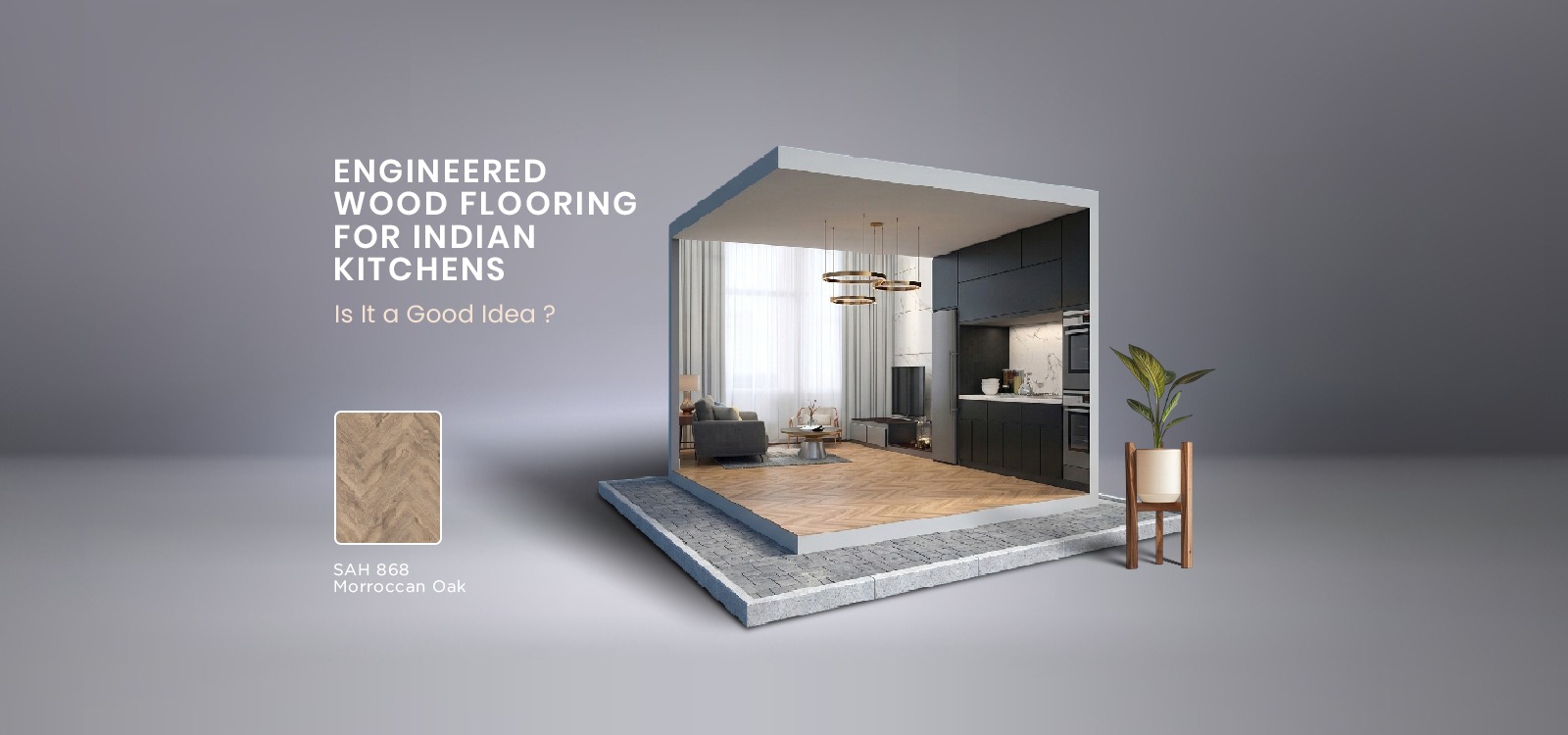
Engineered Wood Flooring for Indian Kitchens: Is It a Good Idea?

When dreaming of a kitchen that seamlessly blends with the rest of your house, tiles just don’t cut it. The use of wood sounds like it would work better, but is it up to the rigours of Indian cuisine? This is when the topic of whether or not to use engineered wood flooring for the kitchen arise. The heat and humidity of Indian cooking make wood seem like a superior alternative. Considering engineered wood flooring for kitchens becomes a realistic option at this stage.
Indian kitchens need the right engineered wood flooring type and finish. Water-resistant alternatives like oak or acacia require more maintenance than tiles, but their sealed polyurethane top coat can absorb spillage. Kitchens with engineered wood flooring seem warm and smooth in open floor plans.
Can You Really Use Wood Flooring in an Indian Kitchen?
The notion that kitchens shouldn’t have wood is quaint and outdated. With the correct care and maintenance, oak floors can now be a reality in Indian kitchens. In Indian kitchens, smoke from oil, water droplets, and heat are all common. Because of this, the floor must be both resistant to spills and well-protected.
A sealed finish on modern engineered wood makes it last longer. Even though a waterproof engineered wood floor isn’t completely waterproof, it can handle daily use if it is sealed properly. When choosing engineered wood flooring for kitchens, it’s more important to think about how one can take care of it than the material’s limits.
Best Engineered Wood Types for Kitchen Flooring
The type of wood used affects how well the flooring works. Engineered oak is a good choice because it is durable. Acacia is good because it is moisture-resistant and strong. Maple is good for occasional use, while engineered teak is strong. Before finalising your choice, it helps to understand the types, costs, and installation process of engineered wood flooring in detail so you can make an informed decision.
Engineered Wood Vs Tiles Vs Vinyl for Kitchen Flooring
Choosing the right kitchen floor material in India means carefully thinking about both how it looks and how it works. Although tiles are more practical and colder, engineered wood is more attractive and inviting. Vinyl resists but looks bad.
Tiles and vinyl are better at keeping water out than wood, but engineered wood is more comfortable to walk on. Wood needs extra care because it needs to be protected. The relative importance of aesthetics and ease of cleaning will determine your final decision between engineered wood vs tiles for your kitchen.
How to Protect Wood Floors in Indian Kitchens?
Engineered wood flooring for kitchens can be easily maintained with a few precautions. Put rugs near the washbasin and furnace to help keep spills from happening. To avoid damage, wipe away any water or oil right away. Applying a polyurethane sealant once a year keeps the look of the sealed finish and makes it last longer. Also, using a soft underlayment takes some of the stress off of the floor. With regular care, wooden floors in Indian kitchens can work well in even the toughest conditions.
When choosing engineered wood flooring for best kitchen areas, it’s important to strike a balance between function and appearance. Many homeowners like it better than tiles because it looks good and feels warm, even though it needs more upkeep.
Engineered wood flooring for kitchens has the potential to be both functional and aesthetically beautiful, provided the application of the appropriate materials and maintenance are carried out. With the guidance of Royale Touché, browse through the complete range of wooden floors to find the perfect fit for your kitchen, one that is aesthetically beautiful, durable, and efficient in terms of functionality.
Frequently Asked Questions
1. Is engineered wood flooring suitable for Indian-style kitchens?
Engineered wood flooring is manufactured to resist stains, scratches, presence of moisture and heat, and is long-lasting making it ideal for Indian style sketches.
2. How do you protect wooden floors from oil and water spills?
One must wipe spills immediately and use rugs in high-use areas.
3. Which engineered wood species is most water-resistant?
From the variety of engineered wood species available, teak and acacia are durable.
4. Is wooden flooring more expensive than tiles for kitchens?
Engineered wood flooring is relatively more expensive given the superior quality of raw materials and installation process. However, they are relatively more comfortable and provide a premium look compared to tiles.
5. Can underfloor heating work with engineered wood in the kitchen?
Yes. Engineered wood facilitates radiant heat when correctly fitted.