

Royale Touche Synchronised Texture Laminates: When Surface Feel Matches the Visual Grain

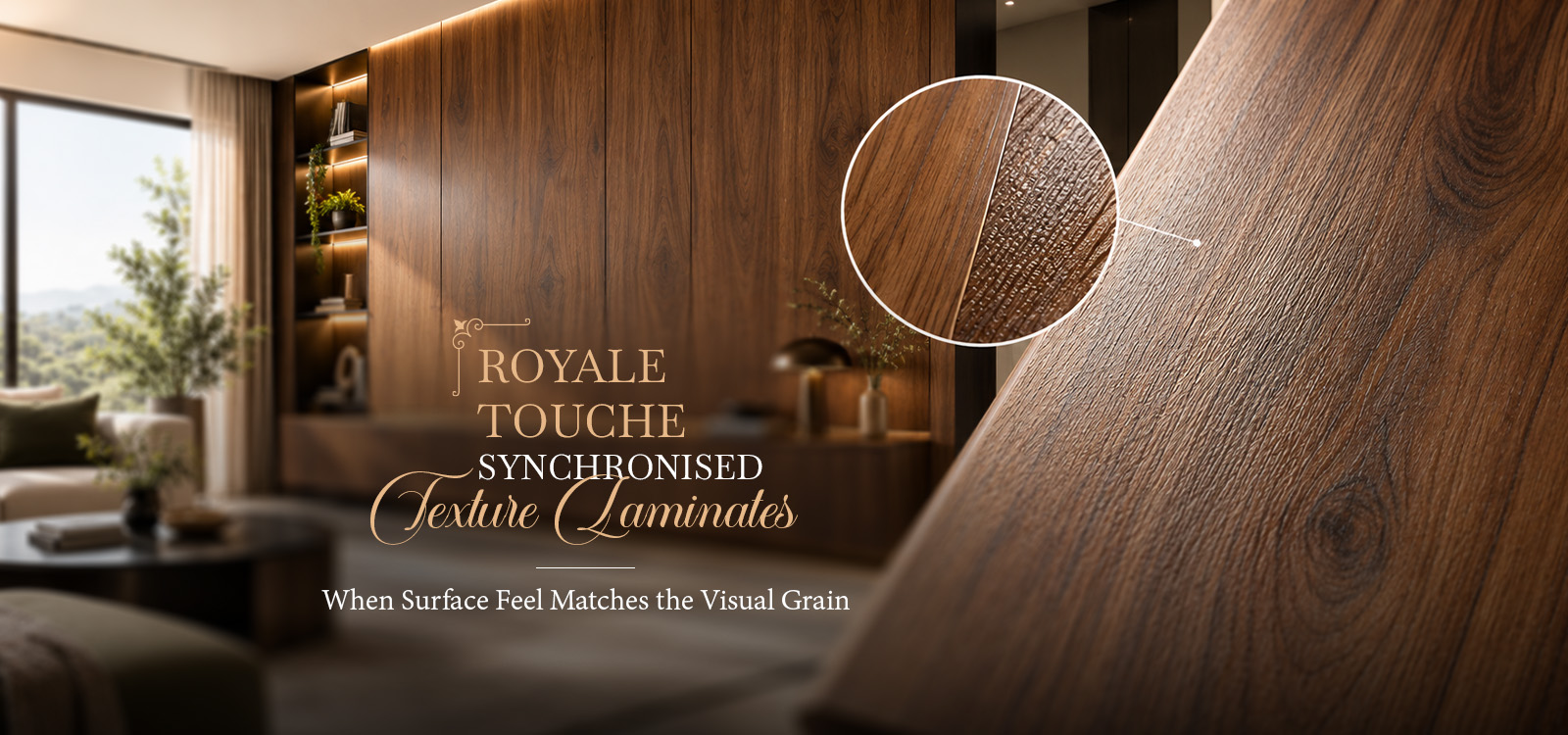
A woodgrain surface looks more convincing when the texture follows the pattern you see. With synchronised texture laminate, the raised lines, small pores, and knots line up with the printed woodgrain instead of sitting randomly across the surface. This is made possible by Embossed-in-Register (EIR) technology. If the design shows a knot, you can feel the knot under your fingertips. The result brings the look and feel of natural wood closer together without the cost and upkeep associated with real wood veneer.
What Is Synchronised Texture Technology?
The difference comes down to whether the texture follows the printed design.
- Standard textured laminate: The surface has a grain-like texture, but it may not line up with the printed wood pattern. A knot might appear in one place while the raised texture runs somewhere else.
- Synchronised texture laminate: The texture is made to follow the exact printed design. Grain lines, knots,s and pores have matching raised or recessed details.
- Embossed-in-register (EIR): This is the industry term for a finish in which the surface embossing lines up with the printed pattern.
With a laminate with matching texture, the surface makes more sense when you look at it closely or run your hand over it. The grain you see is also the grain you feel. This tactile grain gives furniture a more natural finish than a flat printed surface or a texture that does not match the design.
How Synchronised Texture Is Manufactured
The print and the surface finish need to be planned together. Here is how the two types of textured laminate differ during production.
| Step | Standard Textured Laminate | Synchronised Texture Laminate |
| 1. Décor paper printing | A high-resolution woodgrain design is printed on décor paper. | The same type of high-resolution print is used. |
| 2. Pressing plate | A general-purpose texture plate creates the surface pattern. | A custom-engraved plate is made to match the specific printed design. |
| 3. Alignment | The texture may cross the grain, knots, or pores without following them. | The surface details are registered to the printed grain pattern. |
| 4. Finished surface | The design looks like wood, but the texture may feel unrelated to the print. | The visible grain and the tactile grain follow the same pattern. |
| 5. Cost | Usually the more economical option. | Typically carries a 20–40% premium over standard textured laminate. |
The key step is the custom pressing plate. During production, it creates the raised and recessed details in the right places. This is what makes embossed in register laminate different from an ordinary textured finish.
The process relies on careful registration between the print and embossing. Digital pressing technology and precise production controls help create that alignment, so the finished sheet feels consistent with its printed design.
Synchronised Texture vs Standard Texture vs Smooth Laminate
Not every piece of furniture needs a heavily detailed surface. The right finish depends on the design, how closely people will see it and whether they will touch it often.
| Feature | Smooth (Matte/Gloss) | Standard Textured | Synchronised Texture |
| Visual realism | Moderate; depends on the print | Good | Excellent when the grain is well reproduced |
| Touch realism | Flat surface | Some texture, which may not follow the print | Grain, knots and pores align with the design |
| Natural wood effect | Mostly visual | Visual with some surface detail | Strong visual and tactile match |
| Price premium over standard smooth laminate | Baseline | Around 5–10% | Around 20–40% |
| Best suited to | Solid colours and stone prints | Everyday woodgrain furniture | Premium furniture and decorative surfaces |
A smooth finish can work well when you want a clean, understated look. Standard textured laminate adds some surface detail, while synchronised texture laminate is worth considering when the grain itself is an important part of the design.
The higher price does not automatically make it the right choice for every room. Think about where the sheet will be used: a wardrobe door or dining table gets more attention than the inside of a cupboard.
Royale Touche Synchronised Texture Range
The Royale Touche textured laminate range includes woodgrain and other tactile designs for interiors where the surface finish matters as much as the printed pattern. Designers can explore the Royale Touche textured laminate collection to compare rich wood textures and other surface finishes for wardrobes, wall panels, desks, dining furniture, and commercial applications.
- Woodgrain designs: Selected Oak, Walnut, Teak and Ash patterns offer different looks, from the pronounced grain of oak to the warmer appearance of walnut and teak.
- Finishes: Matte EIR and Satin EIR provide options for different levels of sheen.
- Sheet size: The standard size is 8 × 4 ft.
- Thickness: Options include 0.8 mm and 1.0 mm.
Availability can vary by design and finish, so check the current product catalogue before finalising a selection. If you are looking for realistic wood laminate India options, compare the printed grain, surface texture and finish together rather than choosing from the colour image alone.
A useful way to assess a sample is to look at a knot or grain line, then run your fingertips over the same spot. The surface should follow the printed detail rather than feel like a separate pattern.
Best Applications for Synchronised Texture Laminates
This finish makes the biggest difference on surfaces that people see from close range or touch regularly.
| Application | Why the Texture Works Here |
| Wardrobe doors | The grain is easy to see up close, and the tactile finish adds detail when opening or closing the doors. |
| Dining table top | Hands and forearms rest on the surface, so the feel of the finish becomes part of everyday use. |
| TV unit front panel | The grain can be seen clearly from the sofa and examined at close range. |
| Feature wall panelling | Panels at eye and hand level show both the printed pattern and its surface detail. |
| Study desk | A textured woodgrain finish can make the desk feel warmer and less flat under the hands and forearms. |
| Office boardroom table | A carefully chosen finish gives a client-facing table a more detailed, premium appearance. |
For wardrobe doors and TV units, choose a grain that suits the size of the panels and the distance from which the furniture will usually be viewed. Royale Touche’s textured laminate design ideas show how tactile finishes can be used to add depth and visual interest to furniture and interior surfaces without relying only on colour or gloss.
For a dining table or study desk, ask to see a physical sample before deciding. A photo cannot show the tactile grain or tell you how the finish feels against your hand. This is where touch-feel laminate technology makes a practical difference: you can judge the surface by both sight and touch.
Is Synchronised Texture Worth the Premium?
Paying more for a finish makes sense when you will notice it regularly. It is less useful on parts of furniture that remain hidden or rarely get touched.
| Scenario | Worth the Extra Cost? | Why |
| Premium living room furniture | Yes | The grain and surface detail are visible at close range and contribute to the overall finish. |
| Wardrobes in your own home | Yes, if tactile detail matters to you | You see and touch the doors every day, so the finish can be worth the upgrade over time. |
| Kitchen cabinets | It depends | The texture can improve the look, but cleaning and daily use may matter more than tactile detail. |
| Rental property furniture | Usually not essential | Standard textured laminate may provide the woodgrain look without the higher premium. |
| Hidden carcass and shelves | No | These areas are generally out of sight, so the extra surface detail offers little benefit. |
| Commercial reception or boardroom | Often yes | The furniture is visible to visitors and clients, making the finish part of the overall impression. |
If you are choosing synchronised texture laminate for a room you use every day, start with the furniture that has the greatest visual impact. Wardrobes, dining tables and prominent wall panels are sensible places to consider it. For hidden shelves and internal cabinet parts, a standard finish is usually enough.
The decision also depends on the wood effect you want. If the grain is subtle, the difference may be less noticeable. Designs with distinct knots, pores, and deep grain lines give the synchronised finish more opportunity to show its detail.
Frequently Asked Questions
1. What is synchronised texture laminate?
It is a decorative laminate in which the raised and recessed surface details line up with the printed design. If the print shows a knot, the texture is designed to follow that knot. This process is known as Embossed-in-Register (EIR), and it helps the sheet look and feel more like natural wood.
2. How is synchronised texture different from normal textured laminate?
With normal textured laminate, the surface pattern may not match the printed grain. You could see a wood knot in one place while the raised lines run in another direction. With synchronised texture, the embossing follows the print, so the visible grain and the feel of the surface correspond.
3. Is synchronised texture laminate worth the extra cost?
It can be, especially on furniture you see and touch often. Wardrobe doors, dining tables and feature panels are good examples. The finish usually costs more than standard textured laminate, so it may not be necessary for hidden shelves, internal cabinet parts,s or furniture in a rental property where budget matters more.
4. Which Royale Touche laminate designs come in synchronised texture?
Selected woodgrain designs, including Oak, Walnut, Teak and Ash, are available in synchronised texture finishes. Matte EIR and Satin EIR are options in the range. Since the available patterns, finishes and sheet specifications may change, check the current Royale Touche catalogue or ask a dealer to confirm the design you want.
5. Can synchronised texture laminate replace real wood veneer?
Synchronised texture laminate can be a practical alternative if you want a wood-like appearance and a matching tactile grain without using real wood veneer. It is still a decorative laminate, not natural wood, so the material and surface will not be identical. If you want a realistic wood finish for furniture while keeping maintenance straightforward, compare physical samples of both materials before making a decision.
6. How do you clean and maintain synchronised texture laminate surfaces?
Use a soft cloth with water and a mild cleaning solution, then wipe the surface dry. Avoid abrasive scrubbers, harsh chemicals, and excessive water, particularly around joints and edges. Dust can settle into the textured grain, so wipe along the pattern instead of only across it. Always follow the care instructions supplied for the specific laminate.