


Laminates vs Plywood: Which Is Better for Modern Home Interiors?

Selection of material for interior décor of a home is bewildering, especially when one has to choose between plywood vs laminated wood. Homeowners nowadays seek solutions that are stylish yet durable and within their budget. Both have become indispensable in the interior world, with continuously evolving preferences for design, functionality, and longevity. While plywood offers impressive strength, laminates bring refined appeal and protection. However, the challenge is knowing when one is more beneficial than the other and how they work together.
Let us compare both and understand their pros and cons to make an informed decision.
Understanding the Materials
What is plywood?
The multiple layers of wood veneer are pressed together using heat and adhesives, which form the plywood. The strength provided by the alternating grain structure makes it one of the most reliable building materials in furniture, wardrobes, cabinets, and construction related needs. The plywood sheet has the character of stability and durability, which can be suitable for long-term use in interior and construction projects.
The different types of plywood include commercial plywood, hardwood plywood, and marine-grade plywood; the latter has high resistance to moisture. While plywood is excellent structurally, the material may require surface finishing due to the absence of an even texture and ready aesthetic look.
What are laminates?
Laminates are the thin, decorative surface sheets applied on plywood or boards, including MDF. These are prepared with layers of kraft paper, decorative films, and resin pressed together. These are available in glossy, matte, textured, and digital, along with antibacterial types. The choices are endless, from subtle wooden textures to bold marble patterns, metallic finishes, and soft, matte tones.
Unlike raw plywood, laminates protect and add style. They not only enrich the surface for furniture but also protect against scratches, resistant to heat, stains, and moisture.
Laminates vs. Plywood: In-Depth Comparison
1. Strength & Durability
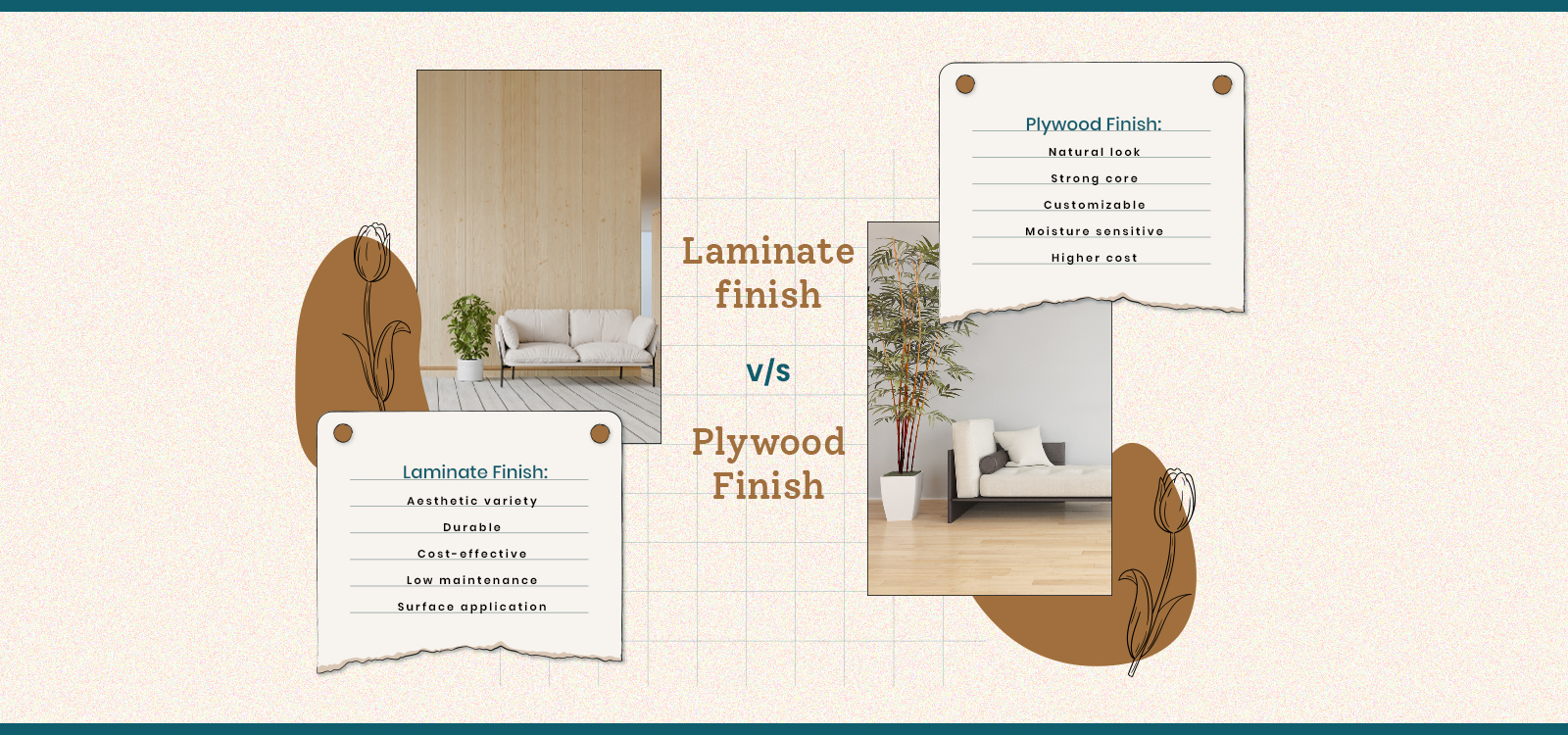
When it comes to laminate vs plywood, plywood has a tinge of difference in structural strength. It can bear heavy loads and works well with cabinets, beds, or storage units. Laminates provide durability by giving a shield over the surface of plywood. Laminates resist scratches, stains, and daily wear and tear; hence are suitable for areas that require regular cleaning and long-term use.
2. Design Flexibility
One of the major advantages of laminates is the variety in design. With a variety of colors, finishes, and textures, laminates offer complete design flexibility to match furniture with walls, floors, and décor themes. On the other hand, plywood has a restricted natural look and is selected based on structure rather than looks. That is what makes laminates superior when aesthetic goals need to be accomplished.
3. Cost & Budget
Cost is one of the major deciding factors in almost all home projects. The cost of one sheet of plywood varies based on its grade and thickness. A high-grade plywood offers superior durability but may upsurge project expenses. Laminates are cost-effective and can deliver a plush look without much added material cost. On a purely laminate vs plywood cost comparison, laminates offer better value for visual enhancement and protection.
4. Maintenance
Maintenance is easier with laminates. They can be cleaned with a cloth and mild cleanser. Plywood often requires a veneer, polish, or paint coating and may be damaged by moisture if left unprotected on its surface. When considering plywood vs laminated wood for long-term maintenance, it’s quite obvious that laminates offer convenience.
5. Application Areas
Both materials have different applications in different parts of a house. Plywood works well as the core material for furniture frames, including those of shelves, beds, and wardrobes. Laminates are best for kitchens, wardrobes, wall panels, study tables, entertainment units, and other areas where the requirements call for stain and heat resistance. In short, plywood provides structure, while laminates provide finishing and usability.
Best Combination: Laminates on Plywood
The best option for Indian homes is to go for laminates on a plywood sheet. It gives strength and offers phenomenal looks with protection of the surface. Plywood provides a trustworthy base, whereas laminates convert the exterior with striking and durable finishes. This combination is well-suited for use in wardrobes, kitchen cabinets, bathroom units, panelling, and furniture constructed for high-touch areas. It offers long-term strength, resistance to moisture, and economy-all features combined that make it very popular in today’s homes.
Also Read:- How to Install Laminates on Plywood on MDF
Frequently Asked Questions
1. Is laminate stronger than plywood?
No, laminates are not structural but for finishing and protection. The main strength comes from plywood.
2. Can plywood be used without laminate?
Yes, but the surface will require polish or veneer, and might not remain resistant to stains or scratches.
3. Which lasts longer?
When used together, laminated and plywood last significantly longer compared to individual use.
4. Which is more moisture resistant?
The best performance in wet areas can be achieved by combining marine-grade plywood with moisture-resistant laminates.
Both materials have highly useful functions, and choice must be made depending on the applications. Between laminate vs plywood, plywood serves excellent purpose for structure, and for style, surface protection, and ease of maintenance, laminates stand out as the best option. For the best results in furniture and interior applications, both should be used together. Discover premium laminate collections for modern homes at Royale Touche today.