

Veneer for Office Interiors: Cabin Panelling, Conference Tables & Reception Design

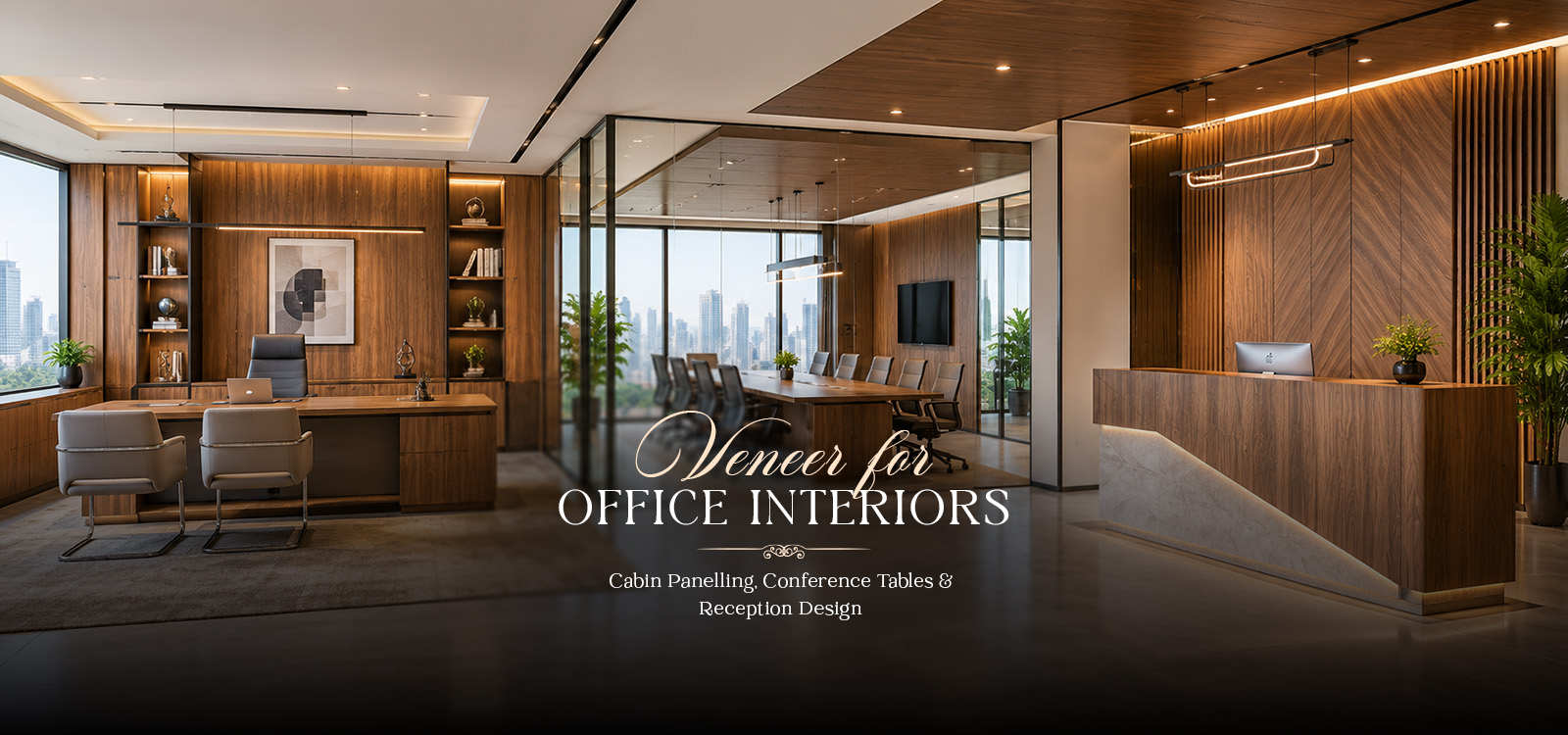
A walnut reception desk, an oak meeting table, or a dark wood wall behind the CEO’s desk can change the feel of an office. Veneer brings natural wood grain into these spaces without making every piece of furniture from solid timber. Veneer for office interiors comes in different shades and grain patterns, making it suitable for reception areas, private cabins,s and shared meeting rooms. Choosing veneer for office interiors allows different office spaces to have their own look while maintaining a consistent design.
Key Zones for Veneer in Commercial Office Design
1. Office Reception and Lobby
Reception desks take plenty of knocks. Bags catch the corners, visitors lean against the counter,r and the surface needs regular cleaning. Smoked oak, teak and walnut are suitable choices for office reception desk veneer cladding. A matte PU finish helps keep glare down and makes everyday marks less noticeable.
The wall behind the desk can carry the company logo or backlit signage. Fluted panels add texture without taking up floor space. In a large lobby, acoustic backing behind the panels may also help reduce echo.
2. Executive Cabins and Director Rooms
Dark walnut, ebony, and smoked eucalyptus work well in cabins where a deeper wood tone is preferred. For executive studies, statement joinery, and sophisticated commercial interiors, Terra Fume Walnut veneer offers a grey-brown fumed walnut character that can work across desk walls, credenzas, feature panels, and selected furniture surfaces.
Executive cabin veneer wall panelling gives the desk a clear backdrop. For a more decorative finish, bookmatched executive walls use neighbouring veneer leaves arranged as mirror images. The grain forms a pattern across the wall, so panel alignment matters. Walnut veneer for corporate office interiors suits spaces where a rich wood tone is paired with neutral walls and simple furniture. Executive cabin veneer wall panelling can also help create a consistent look across the desk wall and storage units.
3. Boardrooms and Conference Rooms
A conference table wood veneer design in quarter-cut oak or walnut gives the tabletop a defined grain. Boat-shaped tables suit larger meetings, while oval tables work well in rooms where space around the table is limited.
Wall panels behind the presentation screen can match the table or use a contrasting shade. Cable flaps and power points are best planned before the table is made. Acoustic wood panelling with suitable backing can help reduce echo during calls, although veneer alone does not soundproof a room.
Species and Finish Recommendations for Offices
| Office area | Wood species | Suggested finish | Practical benefit |
| Reception desk | Smoked oak or teak | Durable matte PU | Helps manage everyday scuffs |
| CEO cabin wall | American walnut | Satin PU | Warm colour with less glare |
| Conference table | Quarter-cut oak | Polyester or PU | Smooth surface for regular use |
| Breakout area | Light ash or maple | Clear matte | Keeps the room looking bright |
When choosing corporate office veneer finishes, consider the light in the room, expected wear, grain consistency, and how different areas need to relate visually. The Royale Touche Luxe Veneer collection includes walnut, oak, ash, and other engineered veneer options that can help designers coordinate reception areas, executive cabins, meeting rooms, and custom furniture without forcing every surface to match.
How to Make Veneer Last in a Busy Office
Reception counters and conference tables have different types of wear. Bags can scrape edges of counters, and cups and office equipment can leave marks on tabletops. Durability in high-traffic commercial spaces depends on the coating, the supporting board,d and the edge treatment.
- Surface finish: Commercial-grade PU or polyester coatings help protect against everyday wear. A scratch-resistant PU coat can reduce minor marks, but sharp objects can still damage the surface.
- Table edges: Solid wood nosing helps protect corners from knocks and chipping.
- Cleaning: Use a soft cloth instead of an abrasive pad. Harsh sprays may damage the polish.
- Spills: Wipe away coffee and water promptly.
- Repairs: Check whether scratches and chipped edges can be touched up if damage occurs.
These points are worth checking when comparing commercial veneer interior ideas for furniture used throughout the working day. They also matter when selecting veneer for office interiors for reception counters, conference tables and other frequently used surfaces.
Conclusion
A walnut wall can give an executive cabin a different feel from an oak boardroom table or a teak reception counter. There is no need to match every surface. The grain, colour and polish can vary from room to room, provided the finishes work together. For veneer in office interiors, the practical decision matters as much as appearance: reception counters need to handle scuffs, while meeting tables need a finish suited to frequent use.
Frequently Asked Questions
1. Why do offices use wood veneer?
Wood veneer gives desks, cabinets, and wall panels a real wood surface without making each piece from solid timber. Different grain patterns also make it easier to carry a similar finish from one room to another.
2. Which polish works for a veneer conference table?
PU is worth considering for a table used every day. Polyester is another option when a different level of shine is required. The final choice should suit the expected wear and the manufacturer’s care recommendations.
3. Which wood is suitable for executive cabin panelling?
Walnut is a popular choice because of its deep brown colour and visible grain. Ebony and smoked eucalyptus create a darker look, while oak keeps the room lighter.
4. Do fluted veneer panels reduce echo in conference rooms?
They may help when fitted with acoustic backing designed to absorb sound. Fluted veneer without suitable backing should not be treated as an acoustic solution.
5. How can veneer office furniture be kept free from scratches?
Use desk mats where equipment is moved around, wipe surfaces with a soft cloth, and clean spills promptly. Avoid dragging laptops, accessories, or other hard objects across the veneer. Protecting the edges also helps prevent chips.