


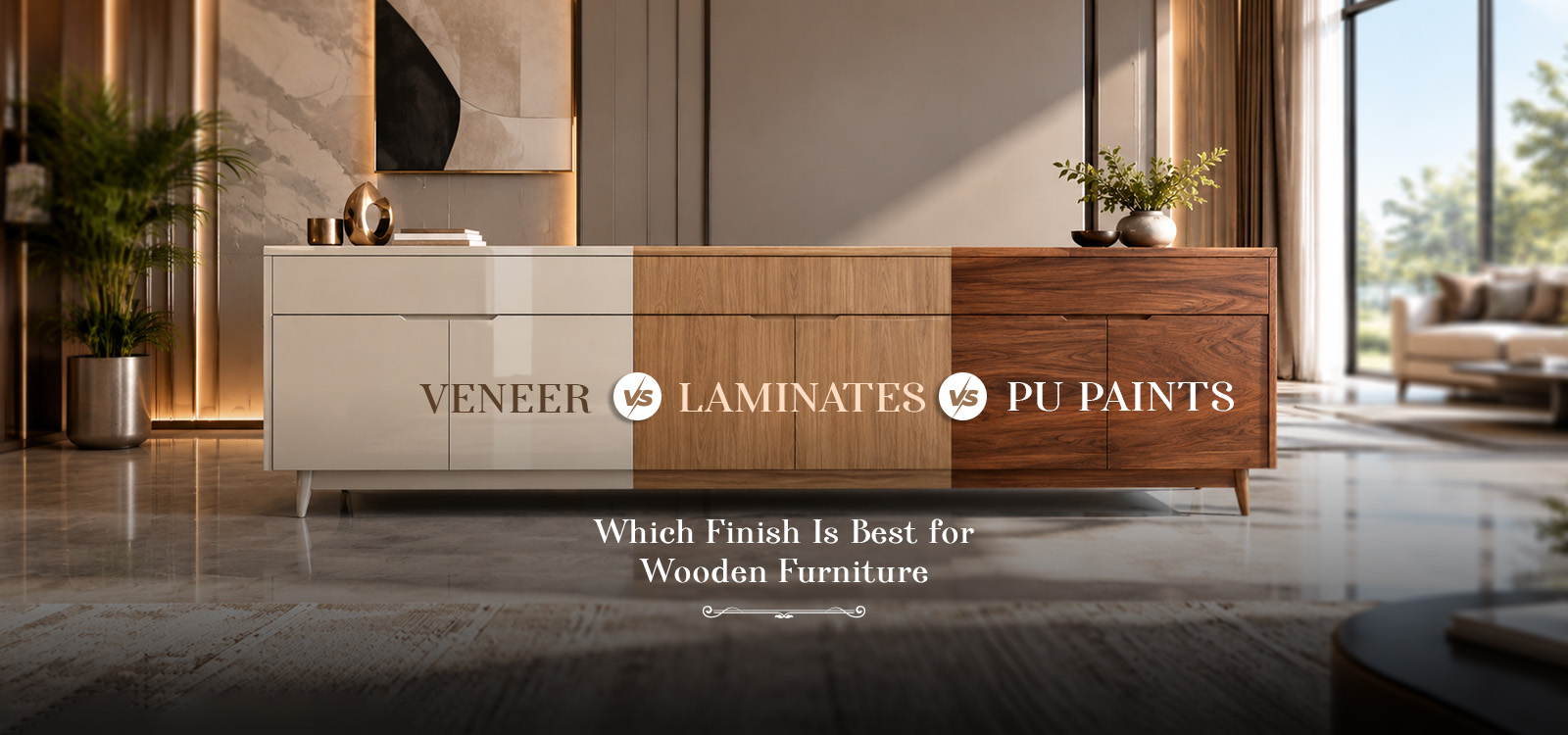
Veneer vs Laminate vs PU Paint: Which Finish Is Best for Wooden Furniture?

A wooden wardrobe, a kitchen cabinet, and a living room TV unit don’t all need the same finish. Kitchen cabinets deal with oil and water splashes, wardrobes get opened throughout the day, and a TV unit may be chosen mainly for its appearance. Veneer, laminate and PU paint each have their own strengths. Veneer shows the grain of real wood, laminate comes in plenty of designs and is easy to wipe clean, while PU paint gives furniture a smooth finish in the colour you want. Laminate prices can range from ₹40–₹120 per sq. ft., depending on the type and design. If you’re weighing up veneer vs laminate vs PU paint, think about where the furniture will go, how much use it will get, and how you want it to look a few years from now.
Overview of the Three Popular Furniture Finishes
Veneer
Veneer is made from thin slices of real wood stuck onto plywood or another engineered wood board. Since the surface comes from actual timber, the grain won’t look exactly the same on every panel. A coat of polish brings out the authentic wood grain, making doors, wardrobes and TV units look like real wood rather than a printed pattern. The downside is that veneer needs some care. Scratches, moisture and worn polish can spoil the appearance if the surface is neglected.
Laminate
Laminate is made by pressing decorative paper and resin layers together and is available in wood looks, solid colours, stones, patterns, matt, gloss, and textured finishes. Homeowners comparing furniture surfaces can explore the Royale Touche laminate collection to see how different decorative finishes can suit kitchens, wardrobes, desks, TV units, and other frequently used furniture.
PU Paint
PU stands for polyurethane. It’s applied in several coats, usually by spraying, to give furniture a painted surface. You can choose a matte, satin or glossy finish in almost any colour. A seamless spray finish works well on plain cabinet fronts, vanity units and modern furniture where visible edge strips would interrupt the look. One drawback is that a hard knock can chip the coating, and making the repair blend in may require a professional.
Three-Way Comparison Table
| Feature | Wood Veneer | Decorative Laminate | PU Paint |
| Look | Natural wood grain, with a different pattern on each piece | Printed wood, plain colours or patterns | Smooth surface in the colour you choose |
| Feel | Natural wood-like texture | Smooth or textured | Matte, satin or glossy |
| Durability | Lasts well with proper polish and care | Handles everyday scratches and stains well | Holds up well, but sharp impacts can chip it |
| Water resistance | Depends on the polish and sealed edges | Generally good, especially with HPL | Good while the coating remains intact |
| Cleaning | Gentle cleaning and occasional polish care | Easy to wipe clean | Soft cloth and mild cleaner |
| Refinishing | May be lightly sanded and polished, depending on veneer thickness | Cannot usually be sanded and refinished | Can be sanded and sprayed again |
| Edges | May need veneer strips | Usually needs laminate edging | Can cover shaped surfaces without visible edge strips |
| Common uses | Main doors, TV units and headboards | Kitchen cabinets and wardrobes | Modern kitchens and vanity units |
When comparing veneer vs laminate vs PU paint, look beyond the sample kept in a showroom. If you are deciding mainly between a natural wood surface and a decorative sheet, Royale Touche’s laminate vs veneer comparison guide explains how the two materials differ in appearance, durability, maintenance, design flexibility, and cost. PU paint can then be evaluated separately where a seamless coloured finish is the priority.
Room-by-Room Finish Recommendations
The finish that works well in a bedroom may not be the best choice for a kitchen. Think about what each piece of furniture has to put up with.
| Room or Furniture | Recommended Finish | Why |
| Main entrance door | Veneer with suitable exterior-grade PU protection | Gives the entrance a natural wood look |
| Kitchen lower cabinets | Laminate or acrylic | Easier to clean after spills and splashes |
| Master bedroom wardrobe | Veneer or PU paint | Veneer shows wood grain; PU gives a plain-colour finish |
| Kids’ room furniture | Laminate | Practical for everyday marks and cleaning |
| Living room TV panel | Veneer | Adds natural grain and warmth |
| Handleless modern kitchen | PU paint | Gives cabinet fronts a smooth, continuous colour |
For the best finish for a wooden wardrobe, think about the rest of the bedroom first. Veneer suits a room with wooden furniture and warm shades. PU paint works if you want the wardrobe to match a particular wall colour or create a plain, modern look. Laminate is a good option if you want plenty of designs and don’t want to deal with regular polishing.
Cost, Care and Long-Term Use
When checking laminate vs veneer vs pu finish cost, don’t compare the surface material alone. The board underneath, design, edge finishing, surface preparation, and labour all affect the final price. Laminate usually needs little more than routine cleaning. Veneer may need fresh polish over time, while PU paint requires careful preparation and several coats.
The choice between PU polish and veneer for furniture comes down to the finish you want. Veneer shows the grain of real wood; PU gives you a painted surface in your preferred colour and sheen. If PU paint chips, the damaged area may need sanding and respraying. A patch can stand out if the colour or gloss doesn’t match the rest of the furniture.
For a luxury furniture finishes comparison, veneer is worth considering when natural wood grain is the main attraction. PU paint suits furniture in clean, solid colours, while laminate offers a wide choice of designs without the upkeep of polished wood. If you’re looking for a durable finish for Indian furniture, consider how often the surface will be touched, wiped, exposed to spills, or left in sunlight.
Good furniture surface material selection starts with how the furniture will be used, not just its colour. Check the maintenance requirements before settling on a finish. Veneer has more refinishing potential than laminate, but the amount of sanding it can take depends on how thick the real-wood layer is.
Conclusion
Veneer, laminate and PU paint suit different furniture and different homes. Veneer gives you real wood grain, laminate makes everyday cleaning easier, and PU paint is a good fit for smooth, coloured surfaces. Before choosing, compare the full price, the care each finish needs,s and what happens if it gets damaged.
Frequently Asked Questions
1. What is the difference between veneer, laminate, and PU paint?
Veneer has a thin layer of real wood on its surface. Laminate uses decorative paper and resin, while PU paint is sprayed onto furniture to create a coloured coating. Veneer is for those who like natural wood grain, laminate is easy to clean, and PU paint gives a smooth painted look.
2. Which finish is most durable for modular wardrobes?
Laminate is a popular choice because it handles everyday marks well and is easy to wipe clean. Veneer and PU paint can also last for years, but veneer may need polish ca,re and PU can chip after a hard knock. The quality of the finish and how the wardrobe is used make a difference, too.
3. Is PU paint more expensive than wood veneer?
It can be, but there’s no fixed answer. PU paint needs surface preparation and several coats, while veneer needs careful fixing and polishing. The price also changes with the wood used, the paint system,tem and the amount of labour. Ask for a quote that includes the board and finishing work before comparing the two.
4. Can you apply PU polish over veneer sheets?
Veneer can be finished with a suitable PU coating, provided the surface is properly prepared. Adds a protective layer and changes the sheen but you can still see the natural wood grain. Ask your carpenter or finisher which coating is right for your chosen veneer.
5. Which finish is best for a modern handleless kitchen?
PU paint suits handleless kitchens if you want smooth cabinet fronts in one color. Laminate is another option if you want easy cleaning and lots of design choices. Think about the look you want, your budget, and how much cooking and cleaning the kitchen sees before making the choice.